The Story between Our Customer and Kaiyubang
Donor Lists Keep Growing? Plan an Expandable Layout
Donor plaques can begin with a short list and become difficult to manage when new names arrive.
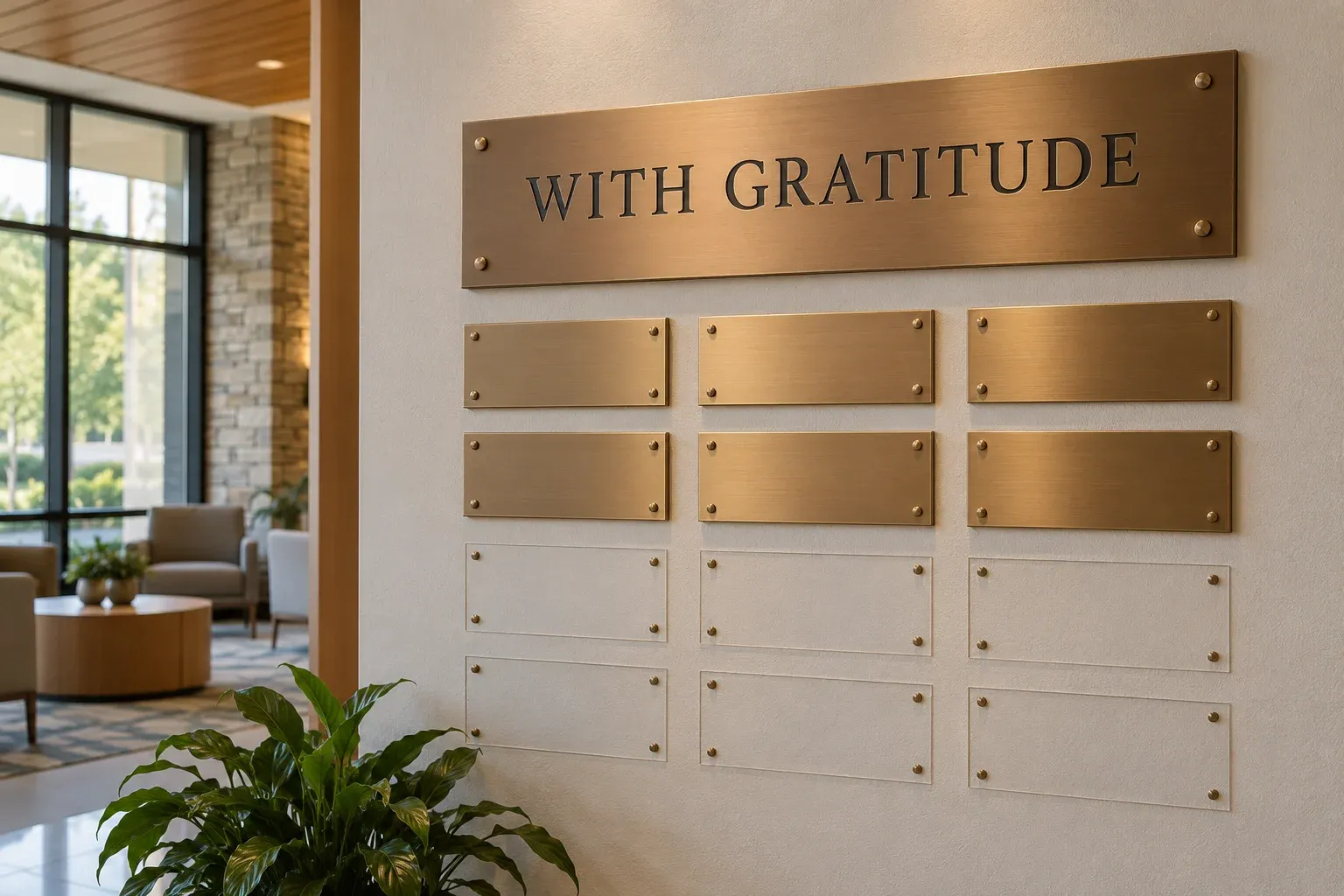
Donor plaques can begin with a short list and become difficult to manage when new names arrive. A fixed inscription may leave no suitable space, while an unplanned addition can look visibly different from the original display.
An expandable layout starts with the recognition process rather than an empty corner on the artwork. Decide which information may change, how additions will be approved, and how future name plates will connect to the same design.
Define Recognition Rules Before the Layout
Ask the organization to confirm how names will be presented. Will entries follow an alphabetical order, a campaign year, or another approved grouping? Does recognition have a defined duration? Who decides when a name changes or an entry is removed?
Do not invent donation categories simply to fill a design. Consistent wording and an agreed approval owner help prevent later arguments about spacing or hierarchy.
The National Park Service’s donor recognition guidance illustrates how an organization can specify recognition locations, content, duration, and anonymity. Those are NPS-specific policies, not universal requirements for schools, hospitals, or private organizations.
Use the example as a prompt to define your own rules, not as a template to copy without review.
Separate Permanent Content from Changing Names
A project title and dedication may remain constant while the list of contributors grows. Consider placing the permanent message on one element and the changing names on separate plates or modules.
Explore metal plaques for format ideas, then discuss which parts of your proposed display need to remain replaceable.
Layout approach | Useful question |
|---|---|
One engraved plate | Can the inscription realistically remain fixed? |
Permanent header with name plates | How will additional entries be positioned? |
Grouped modular sections | What happens when one group fills first? |
Separate campaign panels | How will new panels relate to the original wall? |
Modularity is not automatically better. It introduces joints, additional components, and replacement records. Choose it when those trade-offs suit the expected update process.
Plan Expansion Without Making Promises About Growth
Ask for a realistic range of future entries rather than assuming an exact growth rate. Test the design with short names, long organization names, and any bilingual wording that is actually needed.
Leave a clear method for expansion. This could be reserved positions, a repeatable panel module, or a planned adjacent area. Blank space alone does not solve the problem if the next plate size or mounting pattern has never been defined.
Check the longest proposed wording at the actual plate size. Do not shrink individual names arbitrarily when they fail to fit; establish a consistent line-break or abbreviation approval process.
Make Replacement Practical
Confirm how a plate can be removed and replaced without damaging neighboring surfaces. Discuss access to fixings, the backing construction, and who will carry out the work.
For a public display, the attachment method should reflect the actual location and management requirements. Avoid choosing a connection only because it looks invisible in a rendering.
Record the plate dimensions, hole or mounting positions, material, finish, font, and artwork source. These details matter if another order is placed months or years later.
Expect Some Finish Differences Over Time
New metal and weathered metal may not look identical. Lighting and brushing direction can also affect how replacement plates appear.
Keep an approved finish reference and ask the supplier how repeat orders will be assessed. Do not promise a perfect match to a naturally aged surface without a sample review.
If appearance changes are expected, an intentionally framed or grouped layout may accommodate them more gracefully than an arrangement that depends on every plate looking indistinguishable. Clarify material choices using the brass, bronze, and copper comparison, then confirm the actual specification.
Keep Donor Recognition Distinct from Memorialization
Memorial plaques and donor recognition displays can share materials, but their purposes and approval processes may differ. A memorial inscription may be intended to remain unchanged, whereas a campaign list may be updated periodically.
Confirm the institution’s own policy before combining these uses. Respect requests for anonymity and obtain approved names from the responsible organization. A supplier should not decide who deserves public recognition.
This distinction helps establish whether an expandable display is appropriate at all.
Build an Update Procedure Alongside the Product
Create a simple record showing the current approved names, their positions, the latest artwork revision, and the date of each change. Nominate an owner who authorizes additions and confirms spelling.
Before a new order, compare the requested entry with the existing list to prevent duplicates. Approve a proof of the replacement plate and its intended position. Keep removed parts or records according to the organization’s own procedures.
Also discuss cleaning access and the possibility of damaged components. A replaceable plate is useful only if someone can identify and reorder it accurately.
Design for the Next Order, Not Only the First
An effective expandable donor plaque combines clear recognition rules, a repeatable layout, practical replacement details, and retained production references.
Before ordering, test a plausible future addition rather than approving only the first list. This reveals whether the design can evolve without losing its visual structure.
To discuss an updateable display, contact Kaiyubang about custom donor plaques with the approved wording, expected update process, available space, and installation conditions. Confirm the proposed scope and sample requirements before production.