Gate Looks Out of Place? Review the Whole Entrance
A beautiful gate can still look wrong at the entrance. Check style, proportion and metal gate decorations against the house, fence and driveway before ordering.
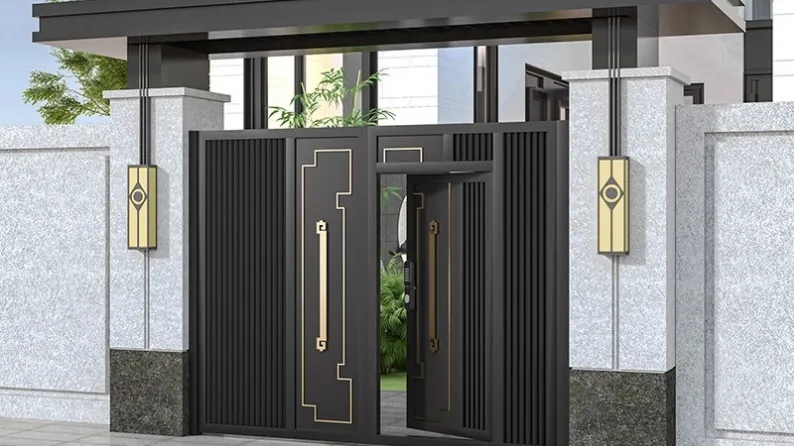
Gate Looks Out of Place? Review the Whole Entrance
A new gate arrives, the workmanship is excellent, the metal is solid — and yet the entrance looks wrong: the pattern fights the house, the height crowds the fence, or the colour sits awkwardly against the facade. The problem is rarely the gate itself, but the way it was chosen: on its own, from a catalogue photo, instead of against the whole entrance it has to live in. No amount of metal gate decorations added afterwards can rescue a gate that does not belong to its entrance, so review the house, the fence, the driveway and the posts together before you approve a design.
A gate is often ordered late, when the budget is nearly spent and the opening date is fixed — so the choice is rushed. This guide walks through the checks that prevent that.
Start with the Elevation, Not the Gate
Ask the factory for a full elevation drawing before you discuss patterns — gate, posts, fence or wall on both sides, driveway and house facade, to the same scale. Most problems show up on that one sheet: a gate too tall for low posts, a wide opening whose pattern reads as a solid wall, or a driveway too steep for the leaf to swing clear.
Measure the opening on site, not from the plan alone — plans change, and a 50 mm difference at the posts can turn a sliding gate into a rebuild. Note the finished driveway level and the swing direction; a gate that swings over a rising drive will scrape on its first day.
Walk the entrance at the time of day the owners will use it most: morning light shows the true colour of the metal, evening light how much of the pattern reads as shadow.
Match the Style, Not Just the Material
A gate has to speak the same design language as the house: a minimalist villa needs clean lines and restrained geometry, a traditional courtyard house needs scrollwork, symmetry and a heavier frame. Mixing the two is the fastest way to make an entrance look accidental. When the house is modern, a Brushed Stainless Steel Landscape Relief Gate with a calm relief pattern sits naturally against stone and glass — the decoration is part of the surface, not bolted on top of it.
Material follows style. Wrought iron suits traditional entrances, where forged scrolls and hammered texture are expected; aluminium suits modern ones, where slim sections and crisp finishes matter. Brass and bronze belong where warmth and occasion are wanted — a hotel entrance, a villa courtyard, a reception forecourt. The material is not a quality ranking; it is a style decision, and metal gate decorations are no substitute for getting the style right.
Metal Gate Decorations: How Much Is Too Much?
Decoration is where good gates most often go wrong. A gate with a strong frame and a clear pattern needs little added on top: when every element carries ornament, the eye has nowhere to rest and the gate reads as clutter. One focal detail per leaf — a crest, a central motif or a clean geometric repeat — and everything else supporting it.
Pattern density matters as much as the motif: a dense pattern looks heavy and blocks light and air, while a sparse one can look unfinished on a thin frame. Ask the factory to show the pattern full size.
Small details deserve the same discipline. Decorative metal gate toppers — finials, scrolls or crests on the posts — should echo the gate's own pattern, not introduce a new one, and metal gate toppers should be fixed so they can be removed for maintenance. For a pedestrian entrance, a Gold Brass Geometric Pedestrian Gate shows how a geometric pattern can be the decoration itself, with no extra ornament needed.
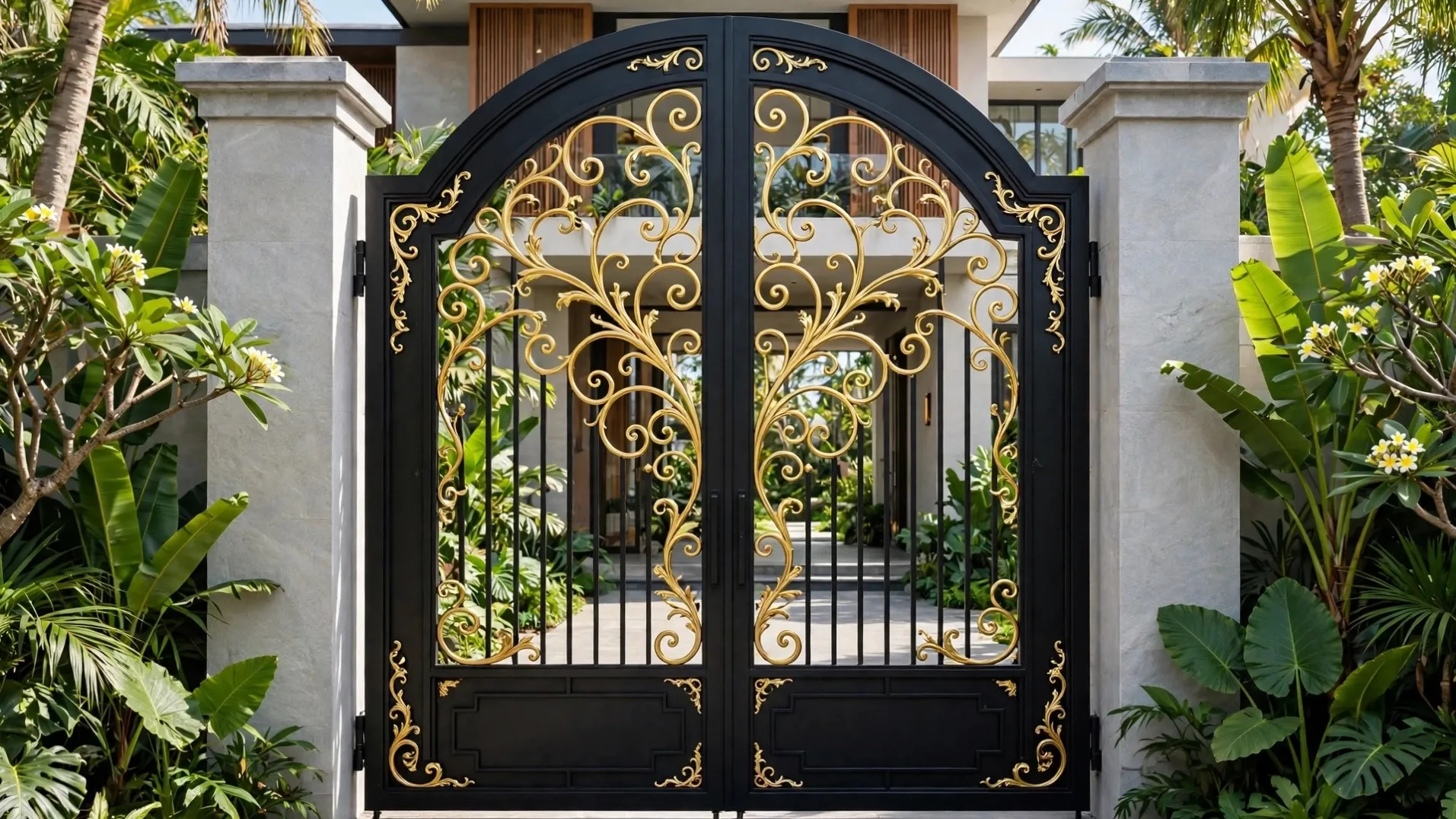
An Antique Gold Wrought Iron Scrollwork Gate is a good reference for traditional designs: the scrollwork is the pattern, the frame is plain, and the whole gate reads as one piece. That is what an ornamental wrought iron gate should do — carry its decoration in its structure. If your design needs a separate ornament to look finished, the pattern is probably too weak, and strengthening it beats adding more metal gate decorations.
Colour and Finish Against the Facade
Colour is judged against the house, not a swatch: black against a white villa reads crisp and formal, but against dark stone it disappears; bronze against warm brick glows, against grey concrete it can look muddy. Take a finish sample to the site and hold it against the facade, fence and driveway in daylight — a finish that looks rich in the factory can look flat on site.
Finish is also a maintenance decision: a polished finish shows every fingerprint and water mark, while a brushed or matte finish hides marks and ages gracefully. In coastal locations, ask what the factory applies under the topcoat. A Champagne Gold Tropical Leaf Driveway Gate shows how a warm metallic finish sits against planting and pale stone; against a dark facade the same tone would need a different treatment.
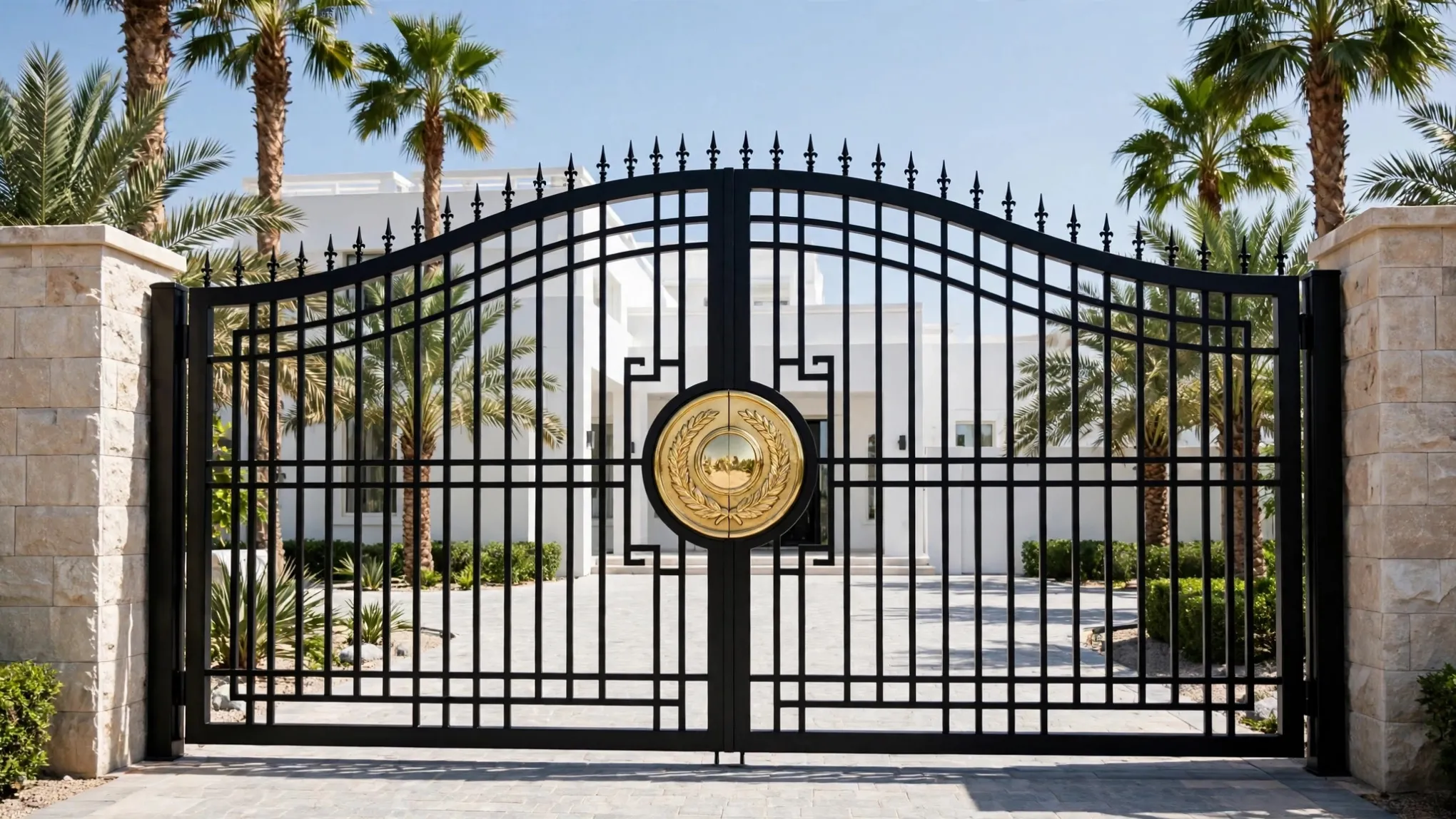
For modern entrances, a Black Steel Geometric Driveway Gate is often the right answer: the geometry does the work, the black finish recedes, and the house stays the subject. For a softer look, a Silver Stainless Steel Wave Driveway Gate brings movement without colour, which suits pale facades and coastal light. In both cases the finish is quiet and the pattern carries the design, with no extra metal gate decorations needed.
Approve a Sample Before the Full Gate
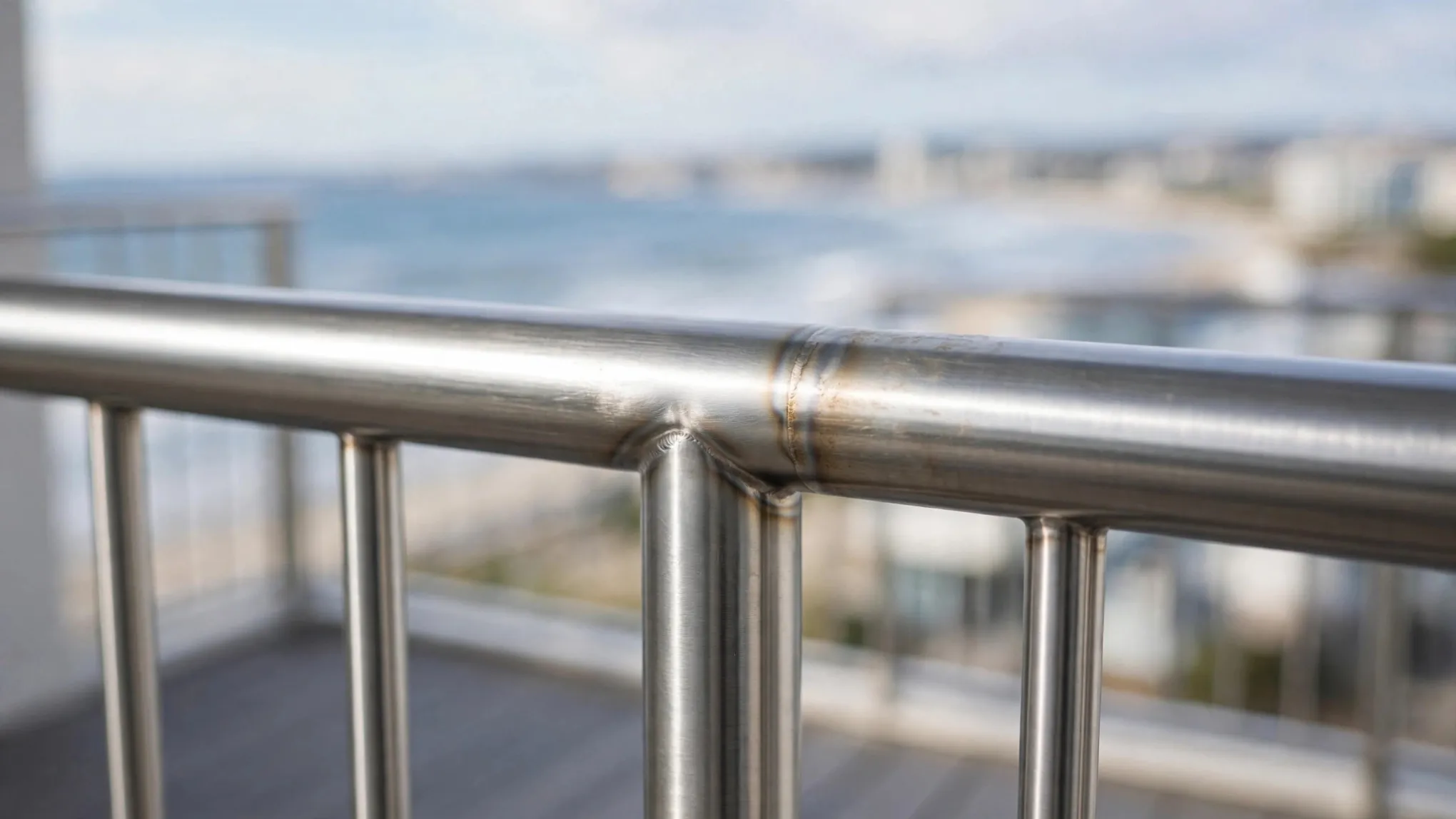
Never approve a full gate from a rendering alone. Ask for a physical sample at full size — one panel, one scroll, one section of the frame — in the exact material and finish. A sample answers what a drawing cannot: how heavy the pattern feels, how the finish looks in daylight, whether welds are clean, and whether the pattern reads at street distance. Decorative metal driveway gates benefit most, because a pattern elegant on screen can look busy at full scale — and even well-chosen metal gate decorations can look wrong at full size if the pattern is too dense.
Put the sample at the entrance for a few days and view it morning and evening, from the street and from the house. Show it to the owner and the architect together and get their approval in writing, with the sample kept as the reference — the factory builds to it, and the client cannot later ask for a different pattern at the same price. Check the back as well as the front: a design beautiful from the street but unfinished from the garden is only half a design.
Before You Order, Walk the Entrance Once More
The final check costs nothing and catches the most mistakes. Stand at the entrance with the elevation drawing, the sample and the measurements, and walk through the scene as a visitor would: does the gate sit comfortably between its posts, does the pattern suit the house, does the colour work with the facade — and is there one clear focal detail? If any answer is no, change the design now — on paper — rather than after the metal is cut. A gate chosen this way needs no rescue from extra metal gate decorations.
When the entrance feels right, send the factory the full package: elevation drawing, site measurements, photographs of the house and street, the approved sample reference and the finish specification. A factory that receives that package can quote accurately and build correctly the first time. Kaiyubang's Foshan factory works this way for hotel and villa projects: custom metalwork made to order, quote reply within one business day, delivery in 2–4 weeks. Send your drawings and entrance photographs for a quote — the entrance you walk through daily will be the one you approved on paper.