Choose Guiding
Wrought Iron Door Leaves | How Kaiyubang Forges Them
Discover how hand-forges decorative iron leaves through repeated heating and hammering for distinctive wrought iron doors, gates and stair railings.
Wrought Iron Door Leaves | How Kaiyubang Forges Them
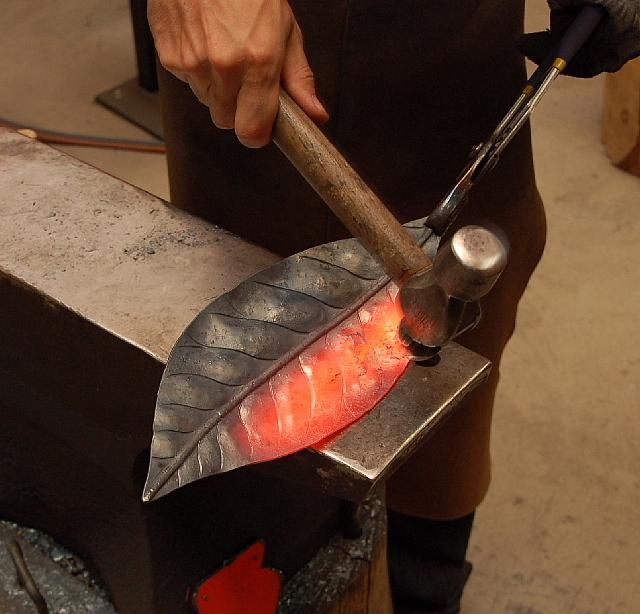
A beautiful wrought iron door is not made beautiful by its frame alone. Sometimes, the smallest detail makes the biggest difference. Take a single iron leaf, for example. It may look like a simple decorative element on a gate or staircase, but creating one by hand requires repeated heating, hammering and shaping. At Kaiyubang, one decorative leaf can go through around ten rounds of forging before its shape is complete. Every curve is carefully formed, turning an ordinary piece of iron into a small piece of architectural art.
A Small Iron Leaf Begins with a Flat Piece of Metal
Look closely at a traditional wrought iron door. You will often find leaves, flowers, scrolls and other botanical patterns woven into its design.
Have you ever wondered how these details are made?
The process starts with a flat piece of iron. The craftsperson first considers the intended shape, the size of the leaf and how it will fit into the overall gate or railing design.
Not every leaf looks the same. Some have long, narrow tips, while others have wider bodies and more rounded edges. Some are designed to follow the movement of a vine, while others are arranged symmetrically around a central flower.
This is why hand-forged decoration is different from simply cutting a pattern from a metal sheet. The final shape is gradually created through the movement of hot metal under the hammer.
How Are Decorative Iron Leaves Hand Forged?
Step 1: Heat the Iron Until It Becomes Workable
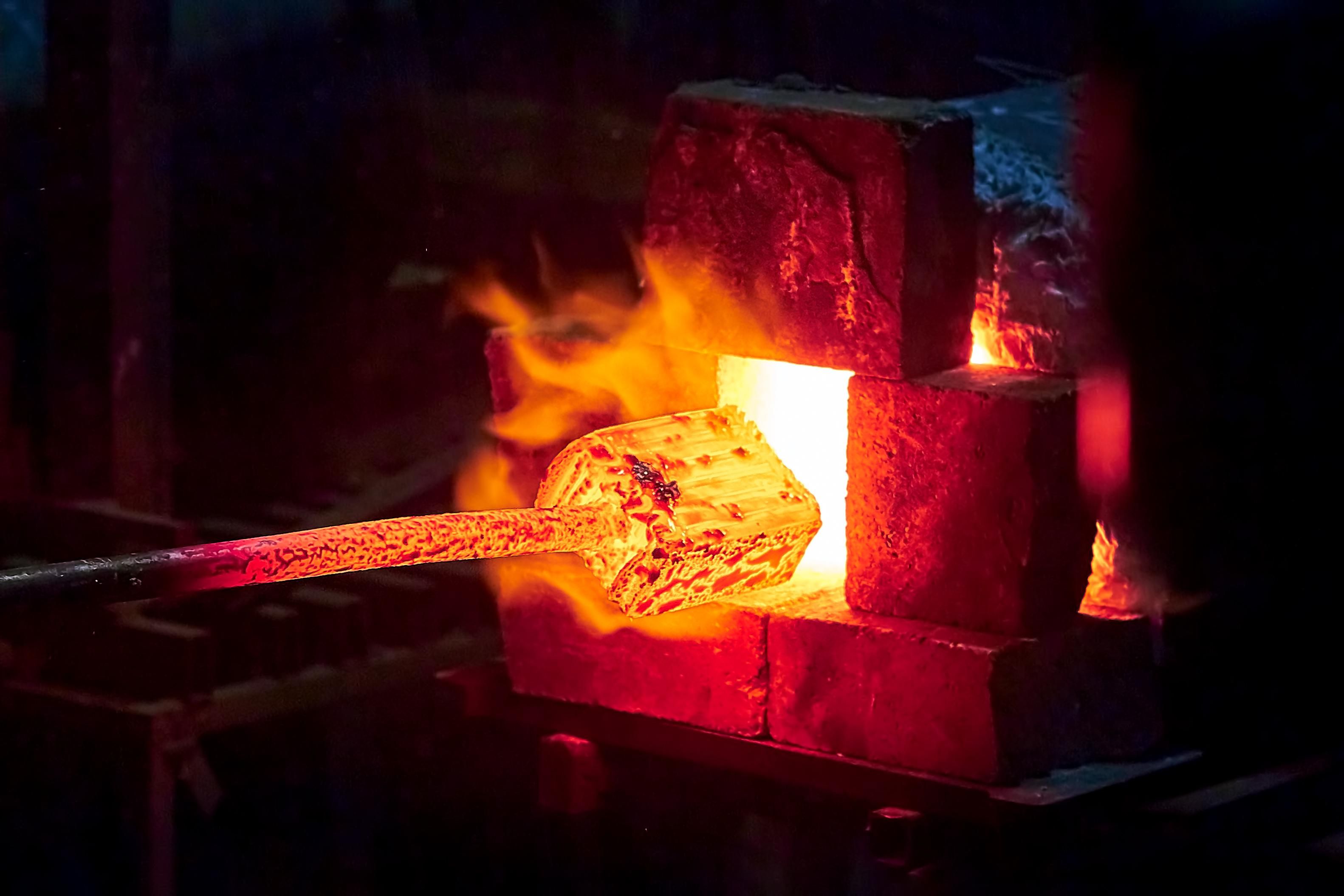
The first step is heating the iron in a forge.
The flat metal piece is held with tongs and placed into the fire. As the temperature rises, the metal becomes workable enough for the blacksmith to shape it.
The craftsperson watches the colour and temperature carefully. Once the iron reaches a suitable working condition, it is removed from the fire and placed on the anvil.
This is where the real work begins.
Step 2: Hammer the Metal to Create the Leaf Shape
The craftsperson begins striking the hot iron with a hammer.
Each hammer blow has a purpose. Some strikes stretch the metal, others narrow the edges, and some create the curves that give the leaf its natural outline.
The direction and strength of each strike matter. A small adjustment can change the shape considerably.
A leaf is not created with one or two hammer blows. Its outline develops gradually as the craftsperson works across different areas of the metal.
Step 3: Reheat and Repeat the Forging Process
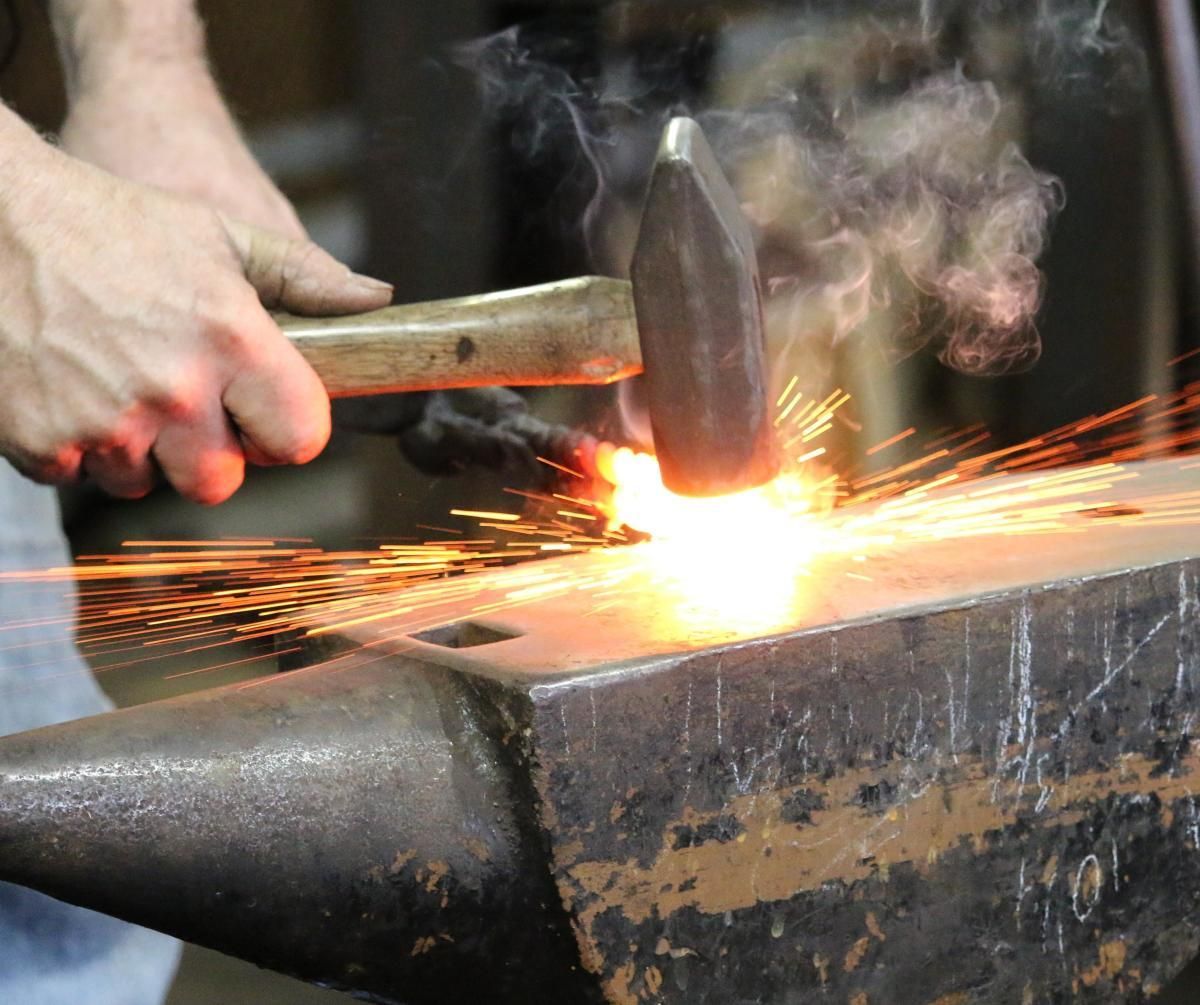
As the metal cools, it becomes harder to shape.
The craftsperson therefore returns the piece to the forge, heats it again and continues hammering.
For the leaf shown in our workshop process, approximately ten rounds of heating and forging may be needed. The exact number depends on the design, thickness and complexity of the ornament.
Each round has a different purpose:
- First, establish the basic outline.
- Then, stretch and shape the edges.
- Gradually create the curves and pointed tip.
- Refine the surface and central vein.
- Adjust the proportions until the leaf looks balanced.
This repeated process is what makes hand forging so demanding. The craftsperson must understand how the metal responds to heat and pressure rather than simply follow a fixed machine pattern.
Step 4: Refine the Details and Bring the Leaf to Life
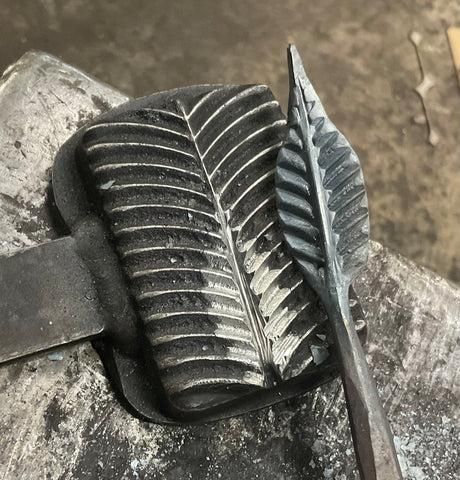
Once the main outline is formed, the smaller details become important.
The edges are adjusted, the central vein is shaped, and subtle surface variations create depth.
A well-forged leaf should not look like a completely flat piece of metal. It should have a sense of movement, with highlights and shadows changing as light falls across its surface.
The difference may seem small when looking at one leaf. But when dozens of leaves are combined on a large entrance gate, the overall effect becomes much more noticeable.
The Victoria and Albert Museum's guide to metalworking techniques explains how traditional forging uses heat and hammering to shape iron and steel. The Metropolitan Museum of Art also preserves a historical film showing the making of ornamental wrought iron through heating, cutting, shaping and joining.
Why Hand-Forged Leaves Make a Difference to a Wrought Iron Door
A decorative iron leaf is more than an ornament. It changes how the entire gate looks and feels.
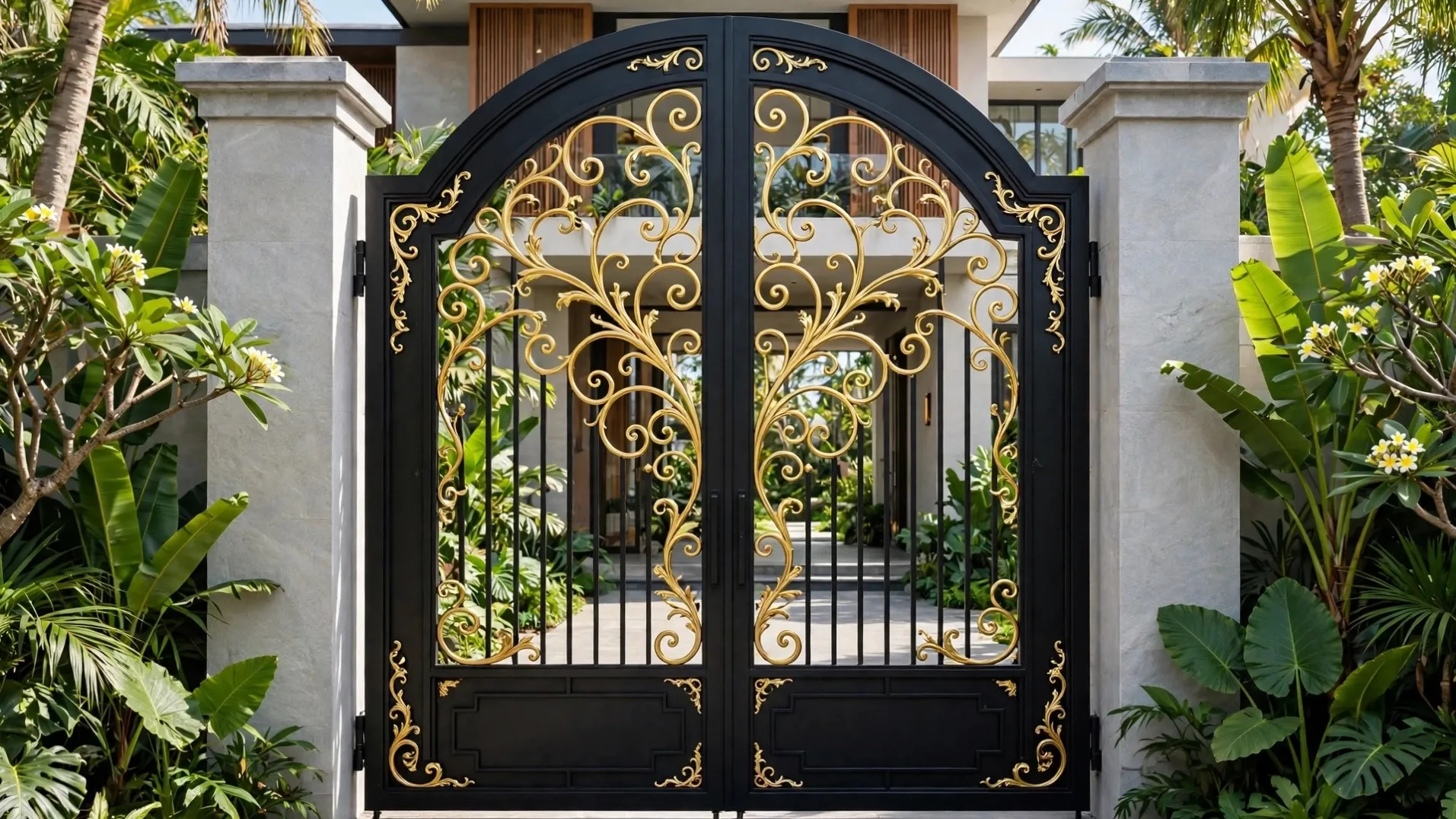
On a luxury villa entrance, hand-forged leaves can soften the strong lines of the frame and create a more natural, elegant appearance. Combined with scrollwork, curved bars and decorative details, they give the entrance a distinctive architectural character.
For a custom metal gateway, the leaf design can be adapted to suit different architectural styles:
- Classic European villas: Symmetrical leaves, floral motifs and traditional scrollwork.
- Luxury estates: Larger botanical details combined with ornamental metal frames.
- Modern residences: Simplified leaf shapes with cleaner lines and restrained decoration.
- Traditional properties: More elaborate forged flowers, vines and curved metal ornaments.
A similar decorative language can also be used for decorative metal fence panels, entrance railings and other architectural metalwork.
If you are comparing a wrought iron door, it is worth looking closely at how the decorative elements are made, not just the overall appearance of the finished product.
Bringing Hand-Forged Details into Metal Stair Railings
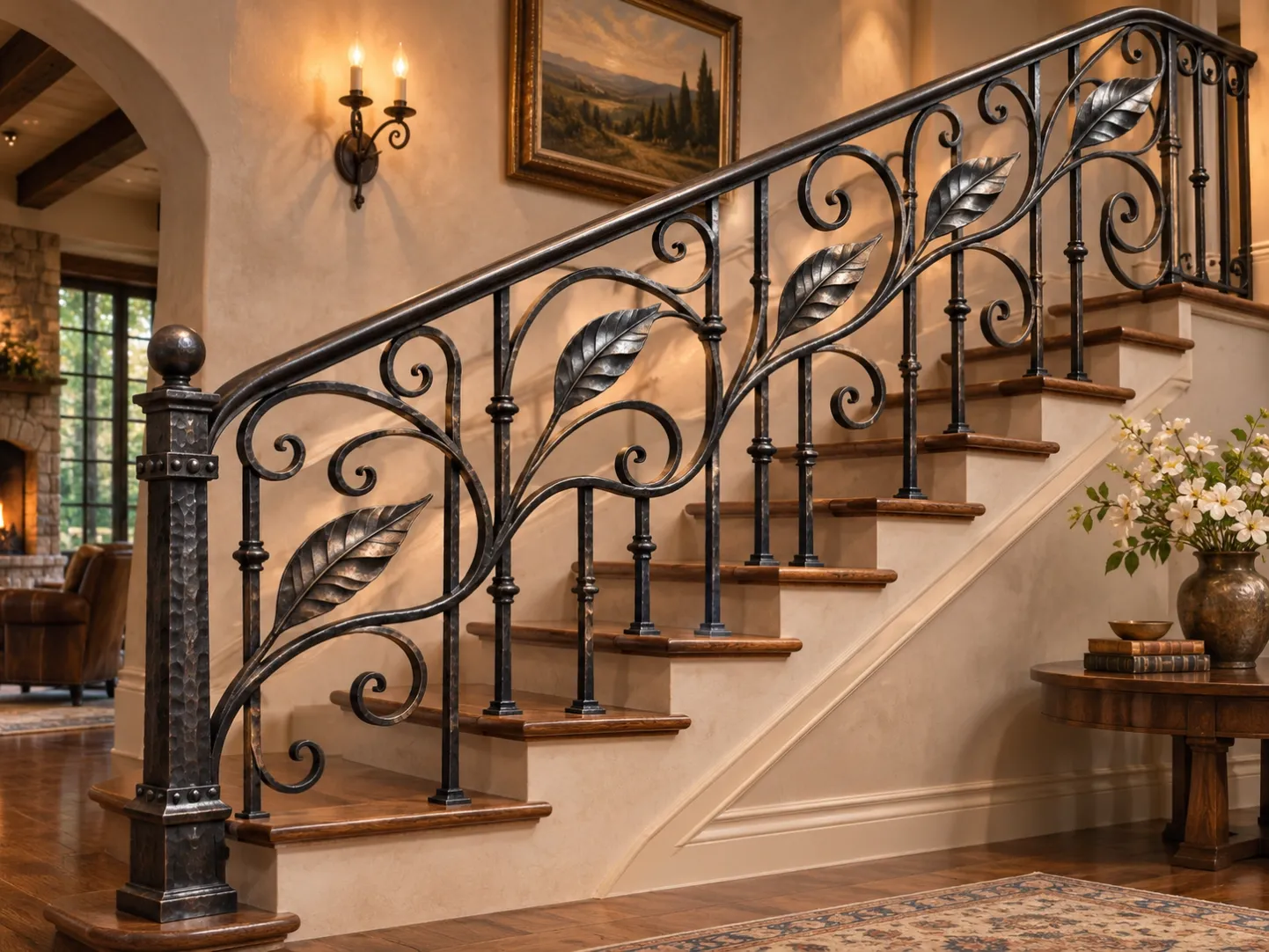
The same attention to detail can be applied to staircase projects.
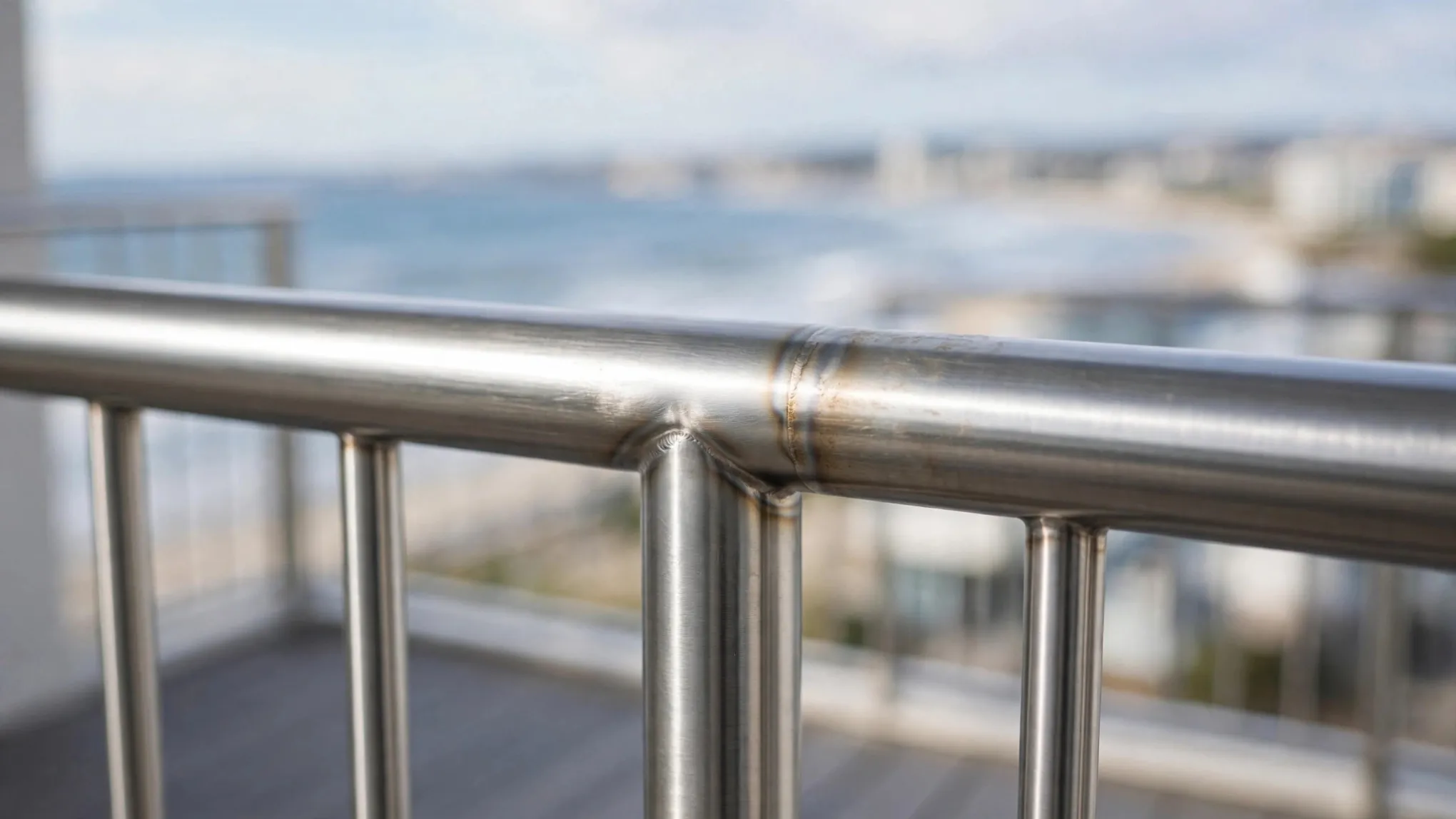
A metal stair railing is both a functional safety feature and an important architectural element. In a luxury interior, decorative leaves can be combined with curved handrails, ornamental posts and metal balusters to create a coordinated design.
For different staircase applications, Kaiyubang can develop decorative concepts for:
- Metal handrails for stairs in residential and commercial buildings.
- Wrought iron handrails for steps in villas and estate entrances.
- Metal handrails for outside steps and exterior staircases.
- Metal handrails for outdoor steps exposed to changing weather conditions.
- Metal stair balusters and decorative railing components.
- Black metal railing interior designs with traditional or contemporary details.
For balustrade staircases, the proportions of the decorative elements should complement the handrail, posts and surrounding architecture.
Buyers searching for a metal railing for stairs should consider more than the decorative pattern. Rail height, spacing, structural strength, fixing methods and applicable building regulations all matter.
A beautiful design must also work as a safe and practical railing system.
Hand-Forged Decoration or Machine-Cut Metal Panels?
Not every architectural project needs the same manufacturing method.
Hand forging and machine cutting serve different purposes.
Hand-forged leaves are shaped through repeated heating and hammering. Their edges, curves and surface details can have a more sculptural appearance.
Laser-cut decorative metal panels, on the other hand, are suitable for precise patterns, repeated motifs and complex hollow designs.
Neither method is automatically better. The right choice depends on the design, budget, production quantity and desired appearance.
For example, a traditional wrought iron door with individually shaped leaves may benefit from hand forging. A contemporary metal railing with a geometric botanical pattern may be better suited to precision cutting.
At Kaiyubang, understanding the difference helps us discuss the appropriate manufacturing approach before production begins.
Beyond the Decoration: What Makes a Quality Metal Gate?
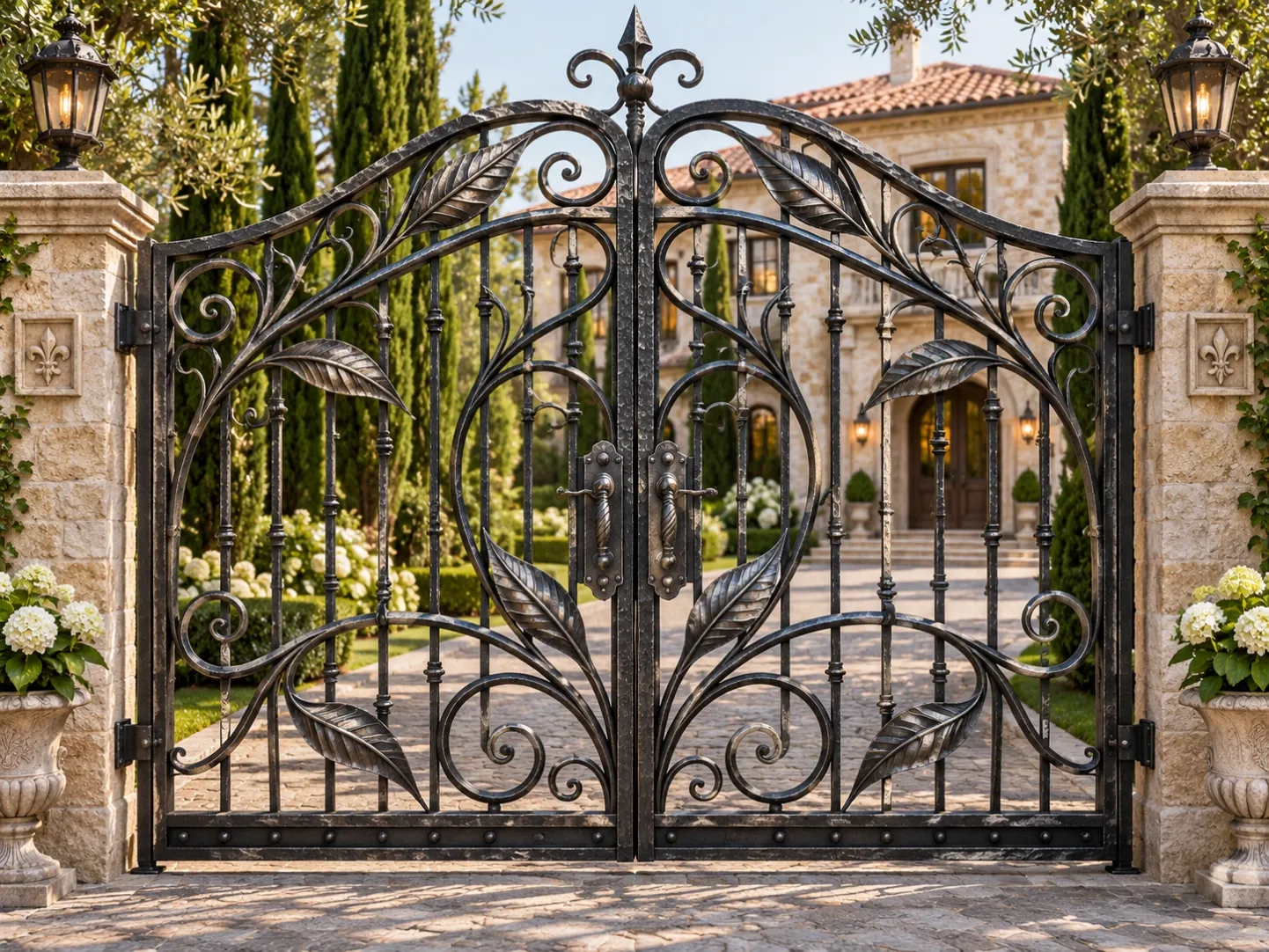
A beautiful leaf is only one component of a complete gate.
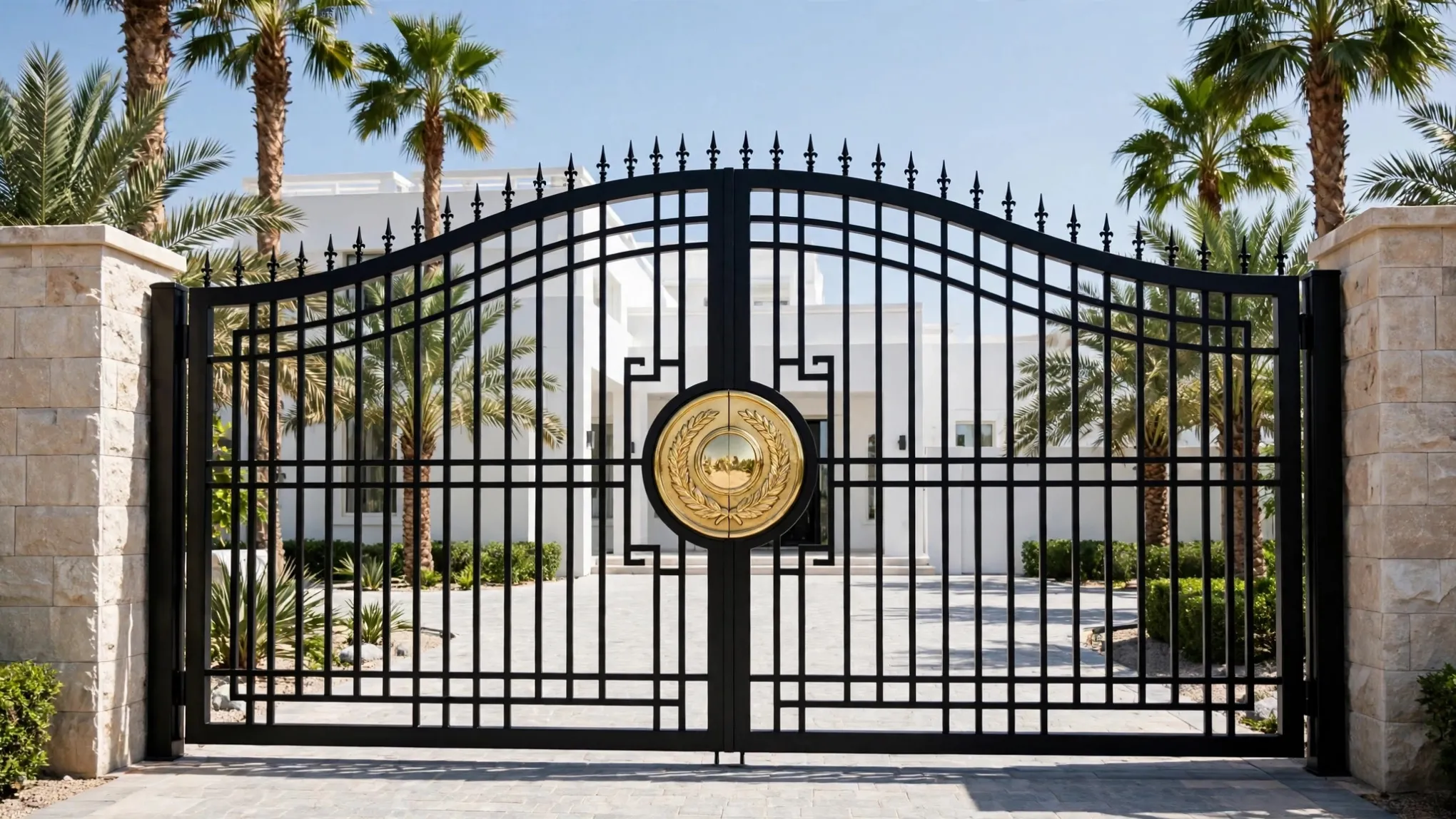
For manual driveway gates and wrought iron sliding gates, the decorative design must work together with the gate frame, hinges, opening mechanism and metal gate hardware.
The supporting structure is equally important. A properly specified heavy duty gate post, suitable fixing points and carefully planned dimensions help ensure that the finished gate performs as intended.
Outdoor projects also need suitable surface protection. The material, surface preparation and coating system should be selected according to the installation environment.
The same principles apply to exterior metal railings and staircase handrails. Decorative details should never compromise the strength or safety of the finished product.
When requesting a quotation, buyers should ideally provide:
- Overall dimensions and installation location.
- Preferred material and thickness.
- Reference drawings or photographs.
- Decorative style and surface finish.
- Required quantity and project timeline.
These details help the manufacturer evaluate the design and prepare a more accurate proposal.
From a Piece of Hot Iron to Architectural Craftsmanship
A small leaf may take around ten rounds of heating and hammering to complete. The process is repetitive, physically demanding and highly dependent on the craftsperson's experience.
But that is exactly what makes the result special.
When you see a finished wrought iron door or an ornamental staircase, you may notice the overall pattern first. Look closer, however, and you will discover the smaller details: the curves of each leaf, the raised veins, the flowing scrolls and the way every decorative element connects with the next.
At Kaiyubang, we believe good architectural metalwork is about more than assembling metal components. It is about combining design, craftsmanship and manufacturing precision.
Whether you are developing a custom wrought iron door, a metal stair railing, decorative metal fence panels or a complete architectural metalwork project, we welcome your drawings, reference photographs and design ideas.
Contact Kaiyubang to discuss your custom iron gate and staircase railing project. Let us turn your architectural design into carefully crafted metalwork.