Choose Guiding
Outdoor Plaques Changing Color? Plan for Patina
Outdoor bronze, copper and brass plaques change colour over time. Learn how patina forms, when to seal a finish, and how to plan the shade yours will become.
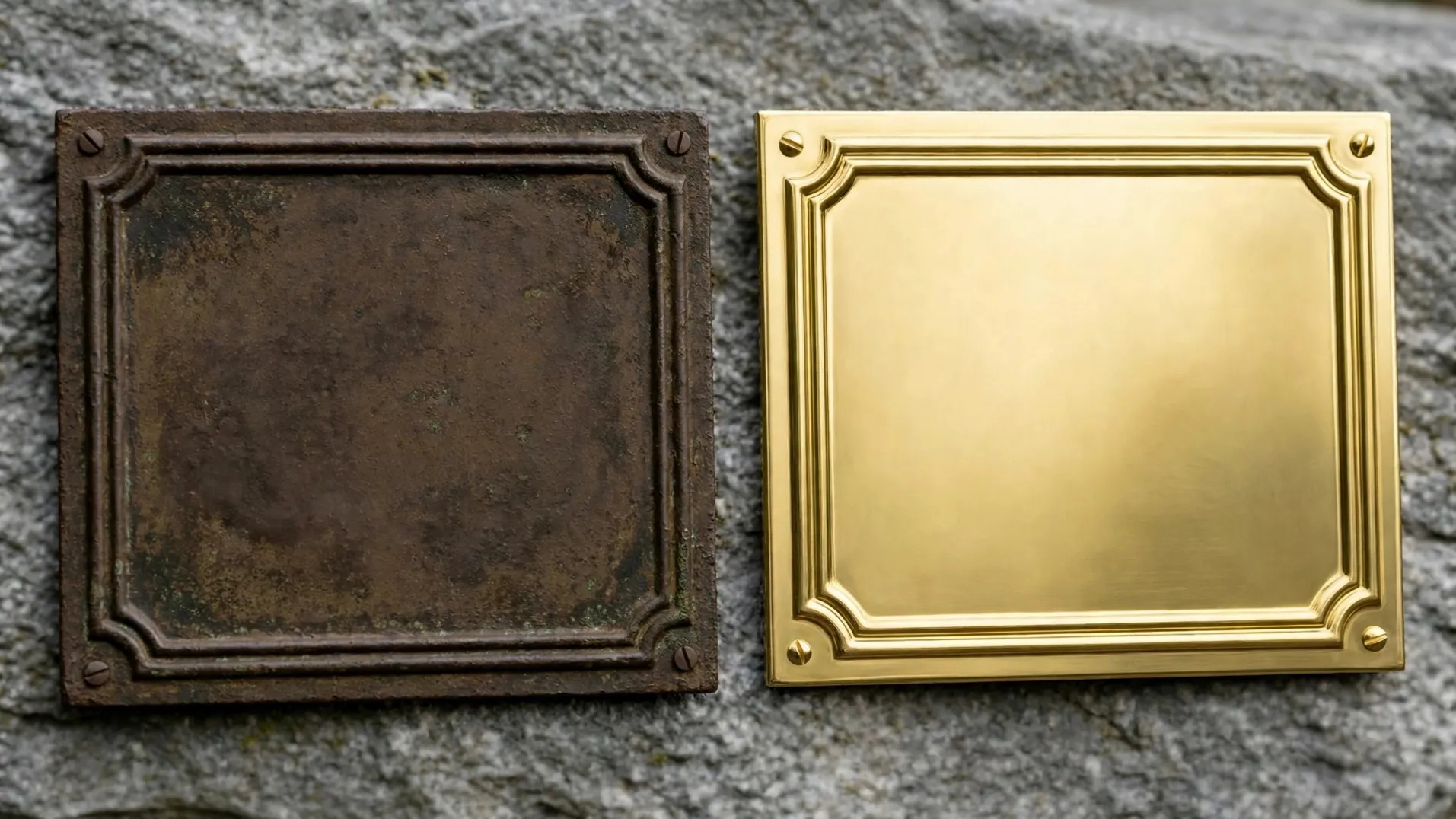
Outdoor Plaques Changing Color? Plan for Patina
A bright new plaque goes up on a wall, and within a year its colour has shifted. The gold looks deeper, the bronze looks warmer, or a soft brown veil has settled across the surface. Many owners worry that something has gone wrong, yet for outdoor metal this slow shift is usually the material behaving exactly as it should. Bronze, copper and brass all react with air, rain and sunlight, and the thin layer that forms is called patina.
Patina is not damage. It grows gradually, and it also protects the metal beneath it. The question is never whether a plaque will change, but how fast, how evenly, and toward which tone. That foresight matters most for a brass plaque custom order, where the bright starting colour makes the later change easy to notice.
Why Outdoor Plaques Change Colour
Every outdoor plaque lives in weather. Rain washes the surface, sunlight warms it, and moisture and salts settle on it between showers. Those elements interact with the metal and slowly alter its outer layer. A plaque that catches morning sun and afternoon rain will move through its colour stages more quickly than one tucked beneath a canopy.
Orientation matters as much as climate. A south-facing wall in a dry region may keep a warm tone for a long time, while a shaded wall in a humid city may darken sooner. Buyers who expect a mirror-bright gold surface to stay mirror-bright outdoors will be unhappy within a season, while buyers who were told it would mellow into a deeper tone will see the same change as character.
Bronze, Copper and Brass Age Differently
The three classic plaque metals do not age in the same way, so choosing between them is also choosing a future colour. Bronze deepens into rich browns, with darker tones in recessed areas and lighter tones on raised letters. Copper moves through warm reds and browns before developing the green-blue tones many people associate with old roofs. Brass, a blend of copper and zinc, softens from bright gold toward a deeper, warmer gold, and then toward brown if left unsealed.
A bronze plaque suits a memorial garden or a historic building, because its darkening feels dignified and settled. Brass suits hotels and residences where warmth matters, because it holds a golden character longer than the other two. If you are weighing the three metals, start with Brass vs Bronze vs Copper: What Is the Main Difference, which explains how composition shapes colour and why a brass plaque custom order behaves differently outdoors from a bronze one made to the same drawing. A Polished Gold Brass Hotel Suite Door Nameplate shows the bright starting point: polished brass at its most golden, before weather begins its slow work.
Clear-Coat or Natural Finish: Choose Your Timeline
The biggest decision after metal is whether to seal the surface. A clear coat, usually a lacquer or a specialised outdoor sealant, slows ageing by keeping air and moisture away from the metal. A natural finish leaves the surface open, so patina forms freely and the plaque changes more quickly. Neither choice is right for every project; the right choice matches how you want the plaque to look in three years, and how much upkeep you will give it.
A natural finish asks for less maintenance but more acceptance. The plaque will darken, soften and gain variation, and that variation is part of its appeal. Some buyers choose a middle path, such as a light seal, or a finish aged in the workshop. A brass plaque custom design suits that approach, because brass offers the widest range of starting finishes, from mirror polish to antique gold.
Planning for the Colour Your Plaque Will Become
Good planning starts with a simple question: what should this plaque look like when it is five years old? If you want it to stay bright gold, choose brass with a durable clear coat. If you want a deep brown, choose bronze with a natural finish. If you want the green-blue character of aged copper, choose copper, leave it unsealed, and place it where rain can reach it evenly.
Placement is part of the plan. A plaque half sheltered by an overhang will age in two tones, because the exposed half weathers faster than the covered half. Where possible, mount the plaque fully exposed or fully sheltered, so the change stays even across the face.
For larger projects, a Silver Stainless Steel Commercial Building Logo Sign holds a cool, stable silver tone outdoors, and a Silver Stainless Steel Office Tower Monument Sign makes the same point at entrance scale. When the brief demands consistency, stainless steel delivers it, and when it welcomes warmth and change, a brass plaque custom design can offer something stainless steel cannot.
Designing Lettering That Stays Readable
Lettering is where patina planning becomes practical. As a plaque darkens, the contrast between letters and background shifts, and a design that was crisp on day one can become hard to read if the contrast was thin to begin with. Deep engraving helps, because the depth creates shadow even as the surface tone changes. Raised letters help too, because their edges catch light differently from the background as both age.
Dark infill in recessed letters stays readable as the surrounding metal darkens, while polished raised letters stay bright against a darkening field. Copper plaques engraved with dark-filled lettering show this well: the lettering remains legible long after the copper has moved through its early colour stages. That readability is worth protecting in a brass plaque custom order, where a clean face and deep engraving will still be easy to read years later.
Antique bronze plaques arrive already aged, so later patina deepens them gracefully, and an etched bronze plaque with a darkened background gains contrast the same way.
Caring for a Plaque That Is Meant to Age
A plaque planned for patina still benefits from simple care. Gentle washing with clean water and a soft cloth removes dust and salt deposits before they create streaks. Avoid harsh cleaners and abrasive pads, which can strip patina unevenly. Once or twice a year, look closely at the plaque in daylight and check whether the coating is still intact. Homeowners can apply the same ideas at a smaller scale, and Outdoor House Number Signs: Materials & Design Guide covers how different materials behave outside and how to choose a design that stays readable from the street.
Before You Order, Ask for the Future Colour
Before approving a design, ask the factory what this metal and finish will look like in three to five years in your location, whether the finish is sealed or natural, and whether it can show you an older example in the same combination.
If you are ordering copper plaques engraved for a garden, say so, because the maker may suggest a different treatment from the one used for a sheltered office plaque. If you want an etched bronze plaque for a memorial, say that too. For background on names, entrances and dedications, see the Building Plaques Guide | Names, Entrances & Dedications. A brass plaque custom project benefits most from this conversation, because each starting finish ages along a different path. Antique bronze plaques arrive already mellowed, so their future change is gentler, while a bright brass plaque custom design will change more visibly in its first year.
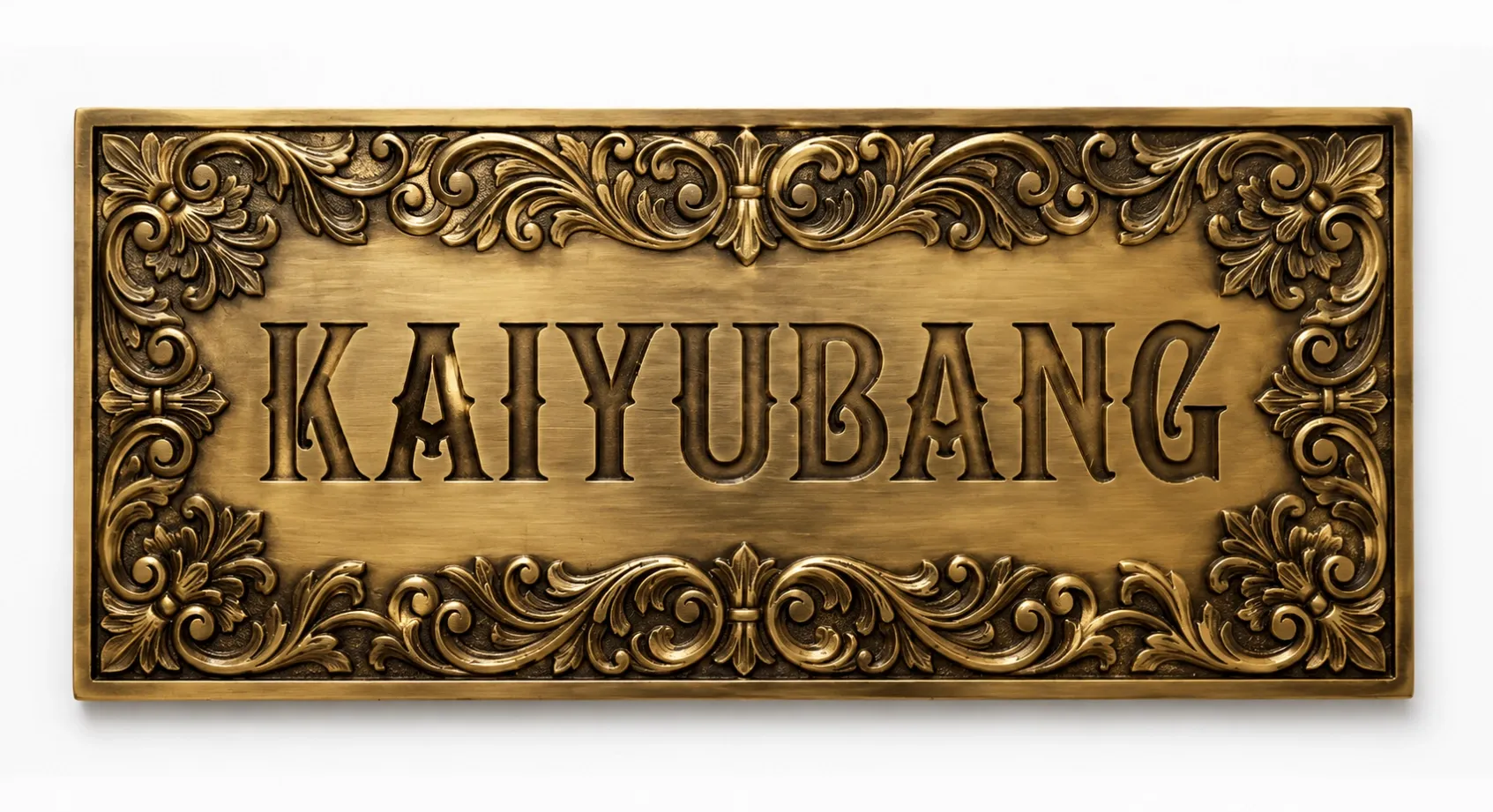
Kaiyubang makes custom metal plaques to order from its Foshan workshop, working directly with hotels, villa owners, architects and builders who need a plaque that suits its setting for years. Send a drawing, a logo, a name or a photograph of the wall, and the team will advise on metal, finish and ageing for your location, then build the plaque to your specification. Quotes are answered within one business day, and finished plaques are normally ready for delivery in 2-4 weeks. To start a project, write to vivianvee639@gmail.com, call +86 13715181867, or reach out on WhatsApp.