Rust on Decorative Gates? Check Materials and Coatings
Rust on a decorative gate starts with the wrong material or finish. Learn how to specify base metals, coatings and care so your gate stays sound outdoors.
Rust on Decorative Gates? Check Materials and Coatings
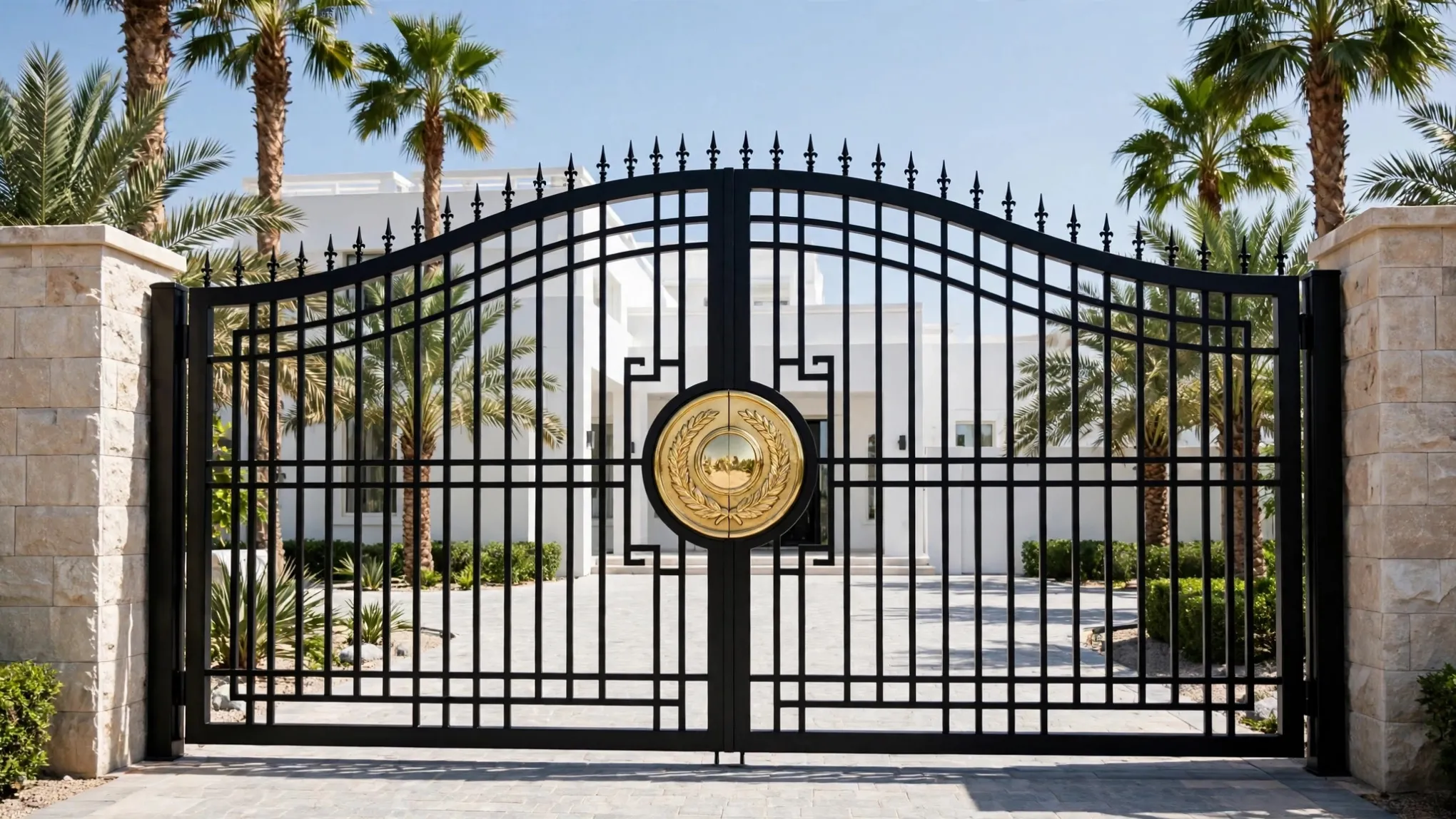
A decorative gate is the first thing a guest touches at a villa or hotel, and it is also one of the first things to show rust if the material or the coating was wrong. Rust rarely appears overnight. It starts in a weld, in a joint where water sits, or under a coating that was thin in one spot, and then it spreads. By the time the orange stain is visible from the driveway, the damage underneath is often much wider. The three things that decide whether a gate stays sound outdoors are the base metal, the coating, and the way the gate is detailed and cared for.
1. Why a decorative gate rusts
Rust needs three things: iron, water and oxygen. A gate gives it all three, every day. Rain runs down the frame, dew settles on it overnight, and in coastal areas salt in the air speeds the process up. The weak points are almost always the same. Welds and joints trap water where two pieces meet. Decorative scrollwork holds moisture in its curves. Hollow sections fill with water if they have no drain hole. And metal ornaments for gates — finials, rosettes, leaves and scrolls — add dozens of small crevices where water can sit unnoticed.
2. Choose the base metal first
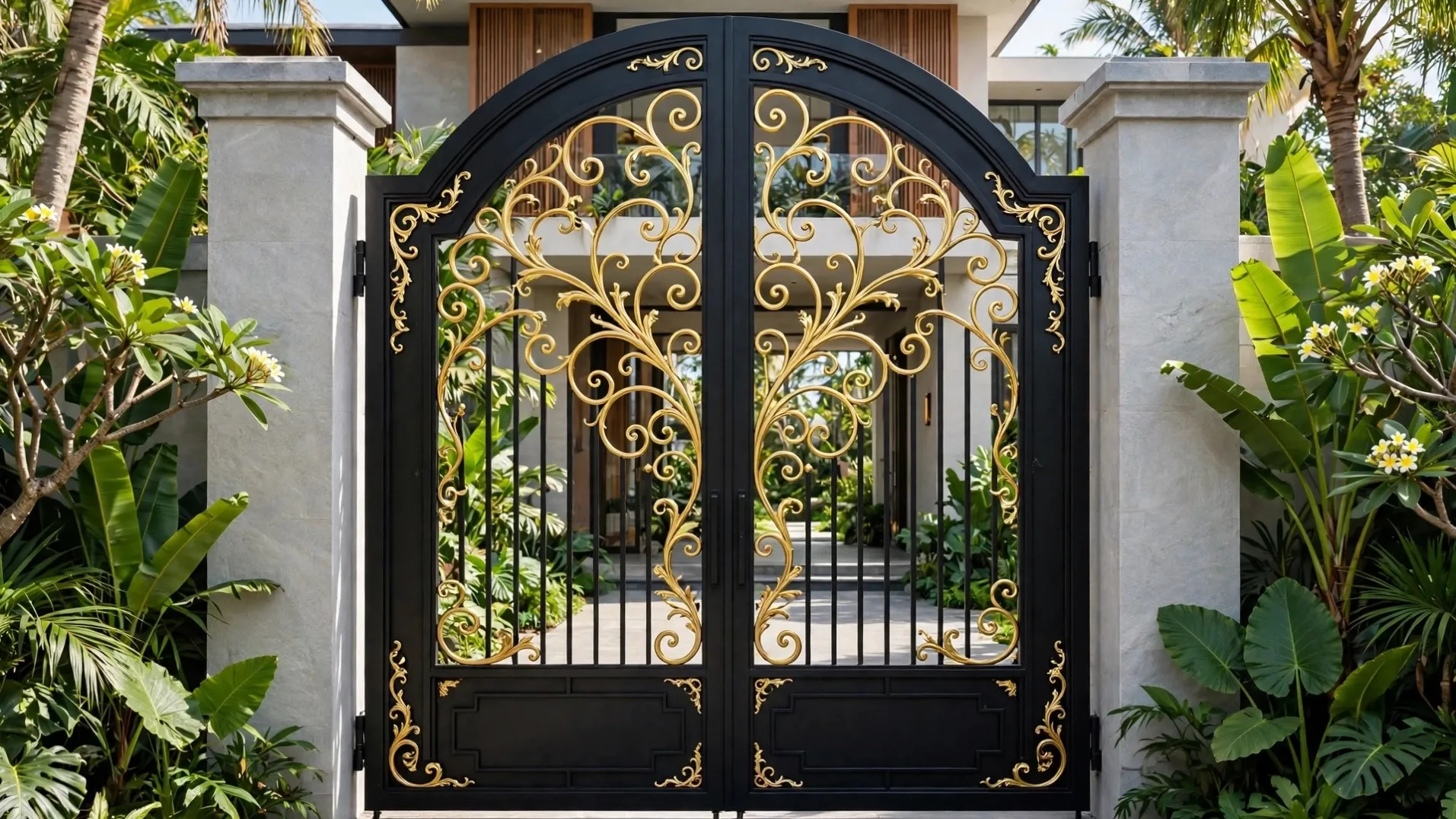
The base metal decides how much protection the gate needs, and how bad the result is if the coating fails. Aluminium is the easiest choice for wet and coastal sites: it does not rust at all, it is light enough to keep large leaves easy to move, and it takes powder coating well. A piece such as the Black Aluminum Branch Pattern Custom Metal Gate shows what aluminium can do — fine branch detail that would be heavy and hard to keep in steel.
Wrought iron is the traditional choice for a decorative gate, and it is still the best for fine scrollwork and a hand-forged look. It does rust, so it needs a proper coating and regular care, but it is strong and repairable. Wrought iron fence decorations — scrolls, spears and rosettes — are usually made from the same iron as the frame, so the whole gate ages in one way and can be refinished in one job.
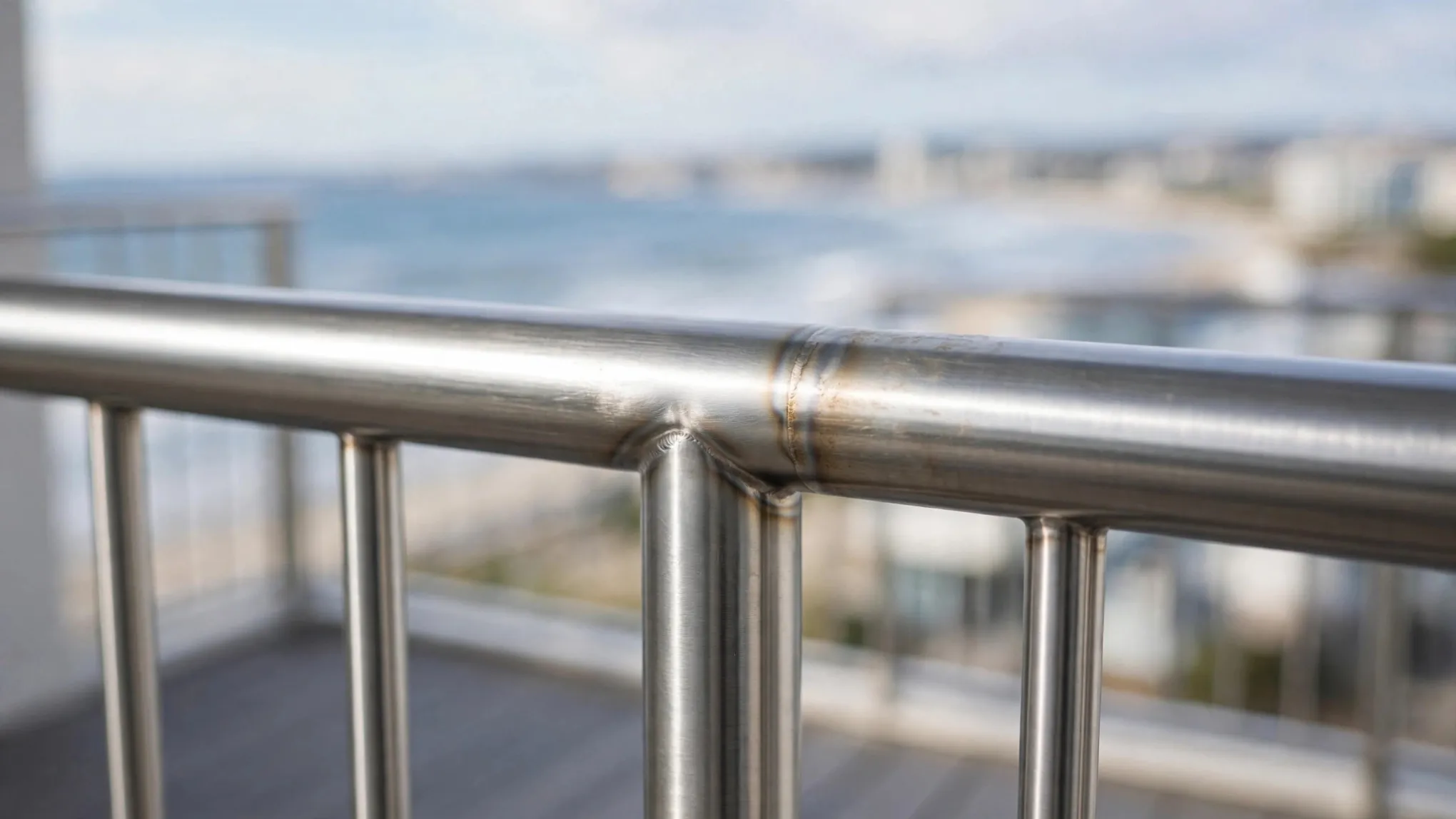
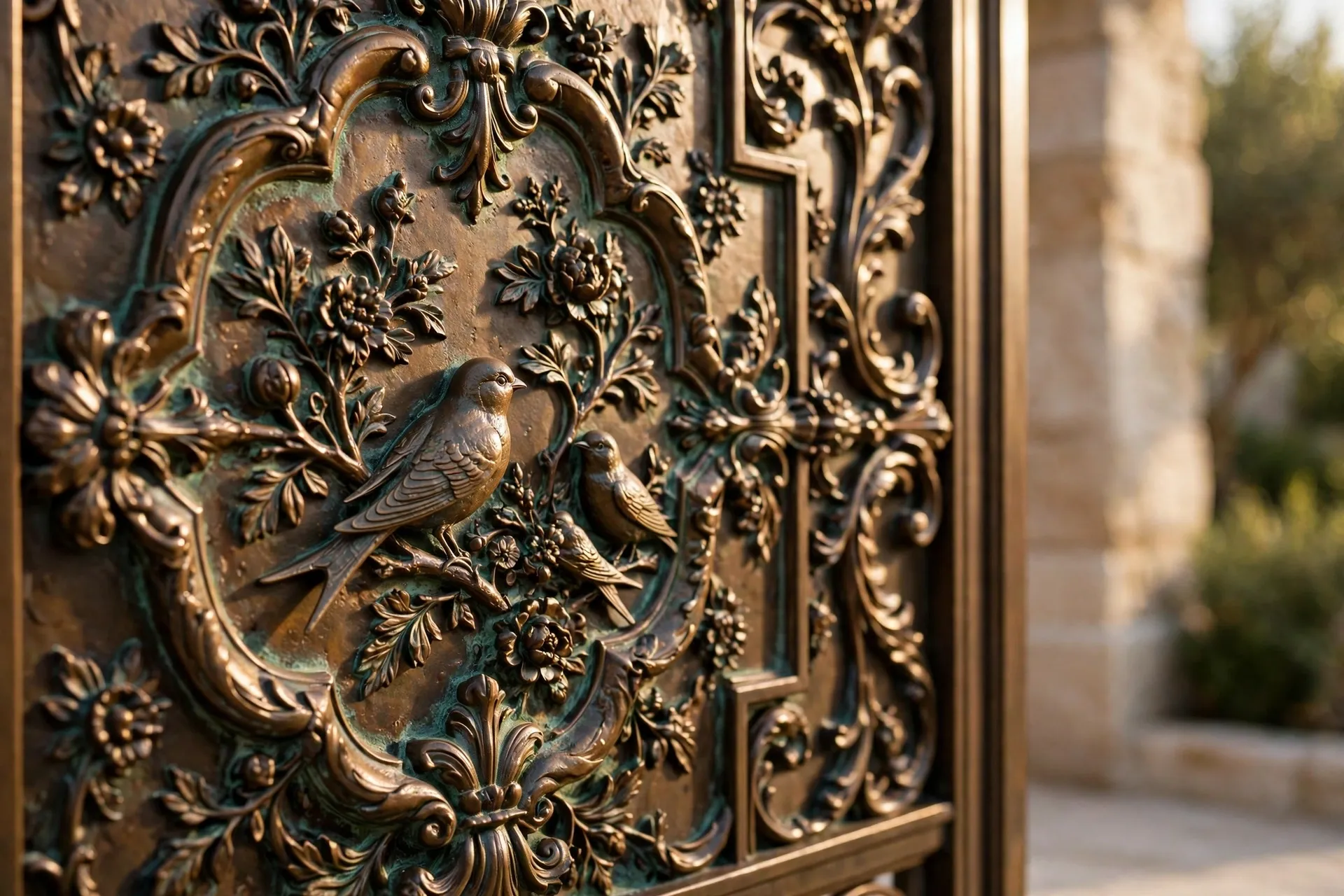
Stainless steel sits in the middle: it resists rust well in most settings, but in a coastal site even stainless steel needs the right grade and a finish that suits salt air. Copper and bronze do not rust the way iron does. They develop a patina instead — a surface layer that changes the colour over time. A piece such as the Courtyard Entrance Antique Bronze Dragon Relief Gate uses bronze for its deep relief, and the Garden Villa Aged Copper Bird Floral Relief Gate shows how copper ages into a warm, lived-in finish. A patinated brass sheet is finished to look aged from the start, so ask for that look to be planned in advance. Near the sea, choose aluminium or well-coated wrought iron; inland, bronze or copper gives a richer finish with less upkeep. Match the metal to the site, not just to the design.
3. Specify the coating, not just the colour
Colour is what you see in the catalogue. The coating is what keeps the gate standing, and it is worth specifying in the same detail. For iron and steel gates, hot-dip galvanising before painting is the strongest start: the zinc layer protects the metal even where the paint is scratched. Powder coating over a galvanised or well-prepared surface gives a hard, even finish that stands up to sun, rain and daily use.
Before you order, ask how the metal is prepared, how thick the coating is inside scrolls and joints, and what the warranty covers. Metal gate decor is often the first place a coating fails, because small decorative pieces are hard to coat evenly — ask whether they are coated separately before assembly, and check inside curves and behind ornaments at handover.
4. Detail the gate so water can escape
Good detailing matters as much as good materials. A decorative gate should be designed so that water runs off it, not into it. Hollow tubes and box sections need drain holes at the lowest point, so rain that gets inside can get out again. Horizontal surfaces should slope slightly, or be capped, so water does not sit on them. Welds should be smooth and sealed, and the lowest rail should sit clear of the ground, so splashed mud and water do not sit on it.
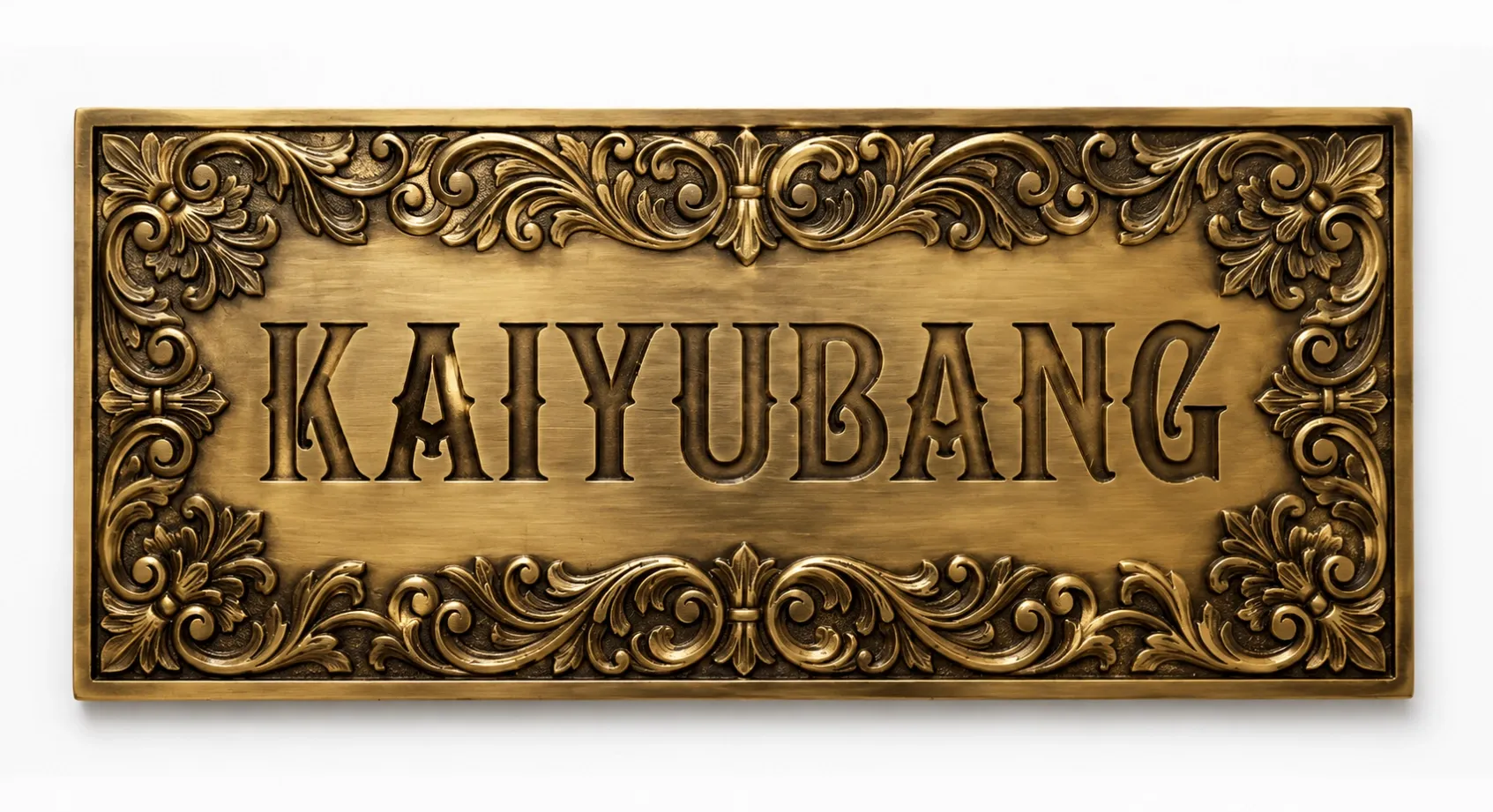
Decorative metal driveway gates deserve extra care here, because a driveway gate is wider, heavier and opened more often than a garden gate. Its hinges carry more load, its frame flexes more, and any crack in the coating at a hinge or a joint opens a path for water. Check decorative fence gates the same way before the installers leave, and ask for any bare spot to be touched up on the spot. Small details are worth specifying too. A house number plaque on a gate should be fixed with stainless steel screws and sealed at the back, so water cannot sit between the plaque and the gate leaf. A piece such as the Black Bronze House Number Plaque for Residential Gate shows the detail to check: fixings, sealing and a finish that matches the gate.
5. Care for the gate after installation
Even a well-made decorative gate needs a little care. The simplest routine is also the most effective: wash the gate twice a year with clean water and a mild soap, rinse it, and let it dry. This removes salt, dust and bird droppings before they can hold moisture against the coating. A chip or a scratch is easy to fix when it is small — clean the spot, let it dry, and touch it up with a matching paint. Left alone, the same chip becomes a rust patch.
In a coastal hotel or a villa by the sea, check the gate more often, especially after storms. Salt air is the hardest test for any coating, and a gate in a hotel courtyard sees more use than a gate at a private house. A piece such as the Hotel Courtyard Champagne Bronze Peacock Relief Gate is made for exactly that setting, but even a gate built for a hotel needs its coating checked after the first winter. If rust does appear, clean it back to bare metal, treat it, prime it and repaint — never paint over rust.
A decorative gate is a long-term part of a villa or hotel entrance, so specify it like one. Choose the base metal for the site, ask how the coating is prepared and applied, and check the detailing — drain holes, smooth welds, stainless steel fixings — before the gate leaves the factory. Metal gate decorations specified and cared for this way keep their finish for years.
If you are specifying a decorative gate for a hotel or villa project, talk to our team at Kaiyubang — a Foshan factory with 10+ years of experience in custom metalwork. We make gates to order in aluminium, wrought iron, stainless steel, copper and bronze, from your drawings, photos or ideas. Send the sizes, design and quantities to vivianvee639@gmail.com or call +86 13715181867, and we can prepare a sample and a factory-direct quote within 1 business day. The Residence Antique Bronze Botanical Relief Gate shows the kind of relief detail we can build into a gate — and the kind of finish that is made to last outdoors.