Solid Metal Balcony Railing Panels for Windy Sites?
Solid metal balcony railing panels catch the wind like a sail. Learn how panel depth, fixings and exposure decide whether a panel stands up to storms.
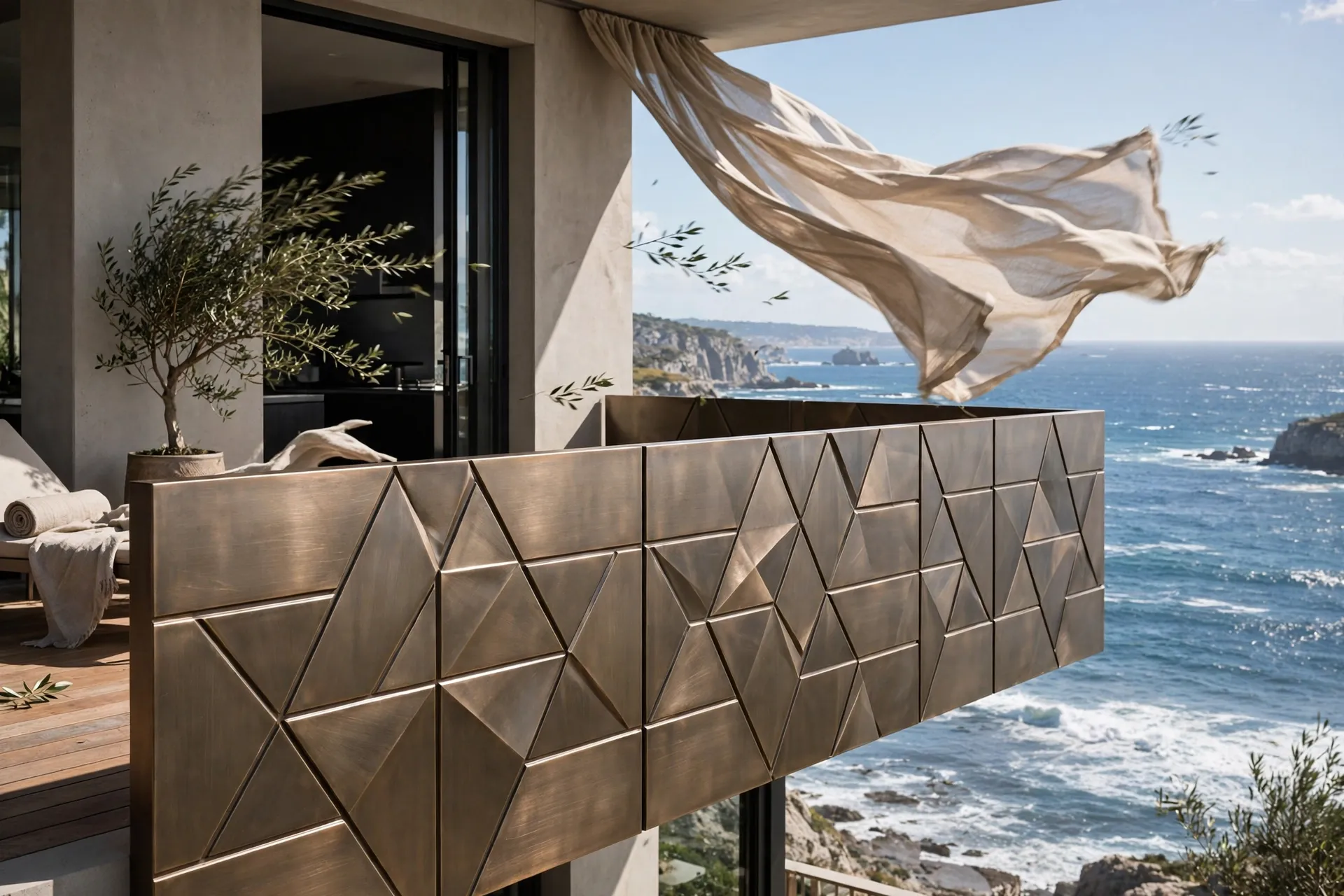
Solid Metal Balcony Railing Panels for Windy Sites?
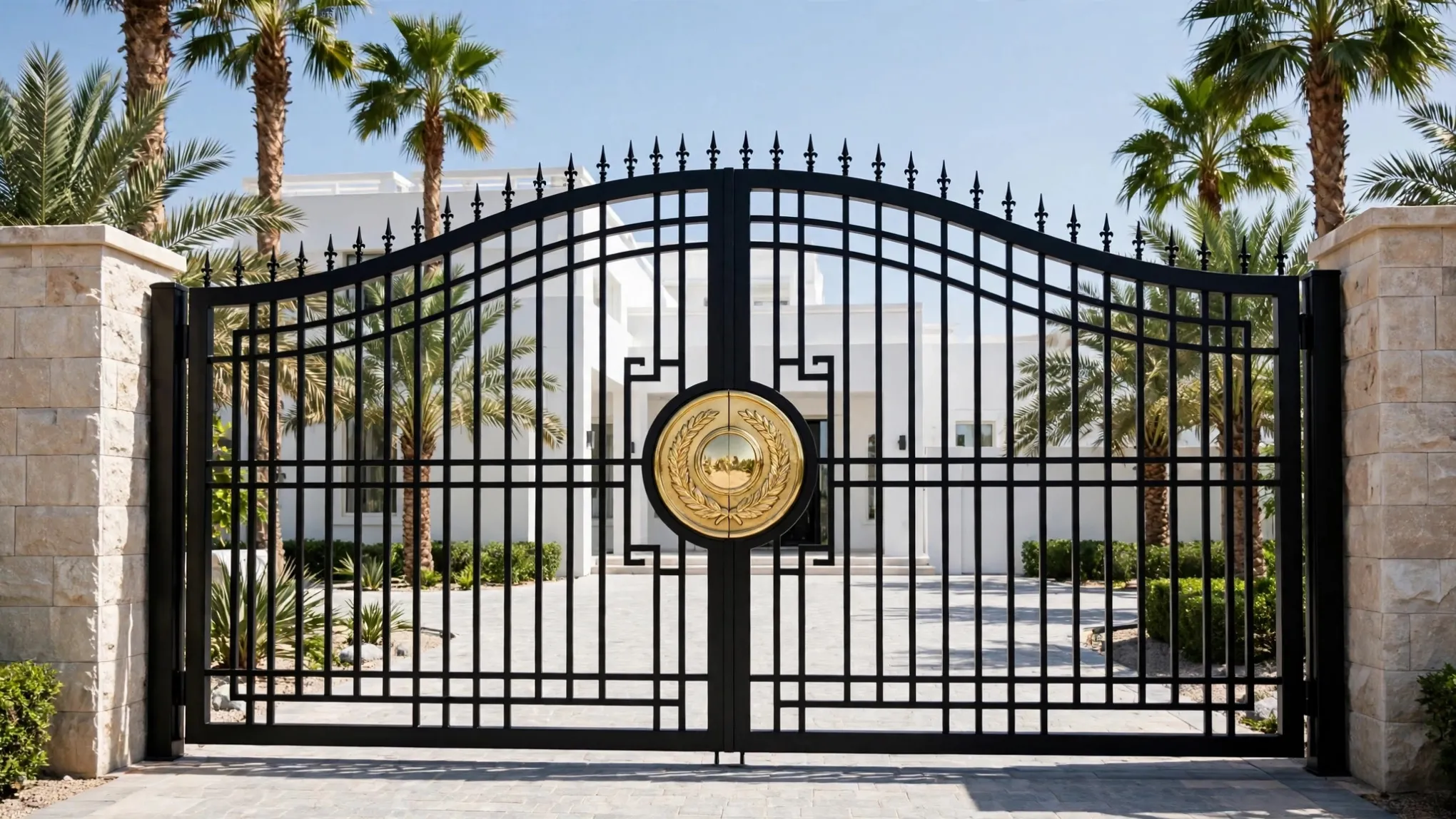
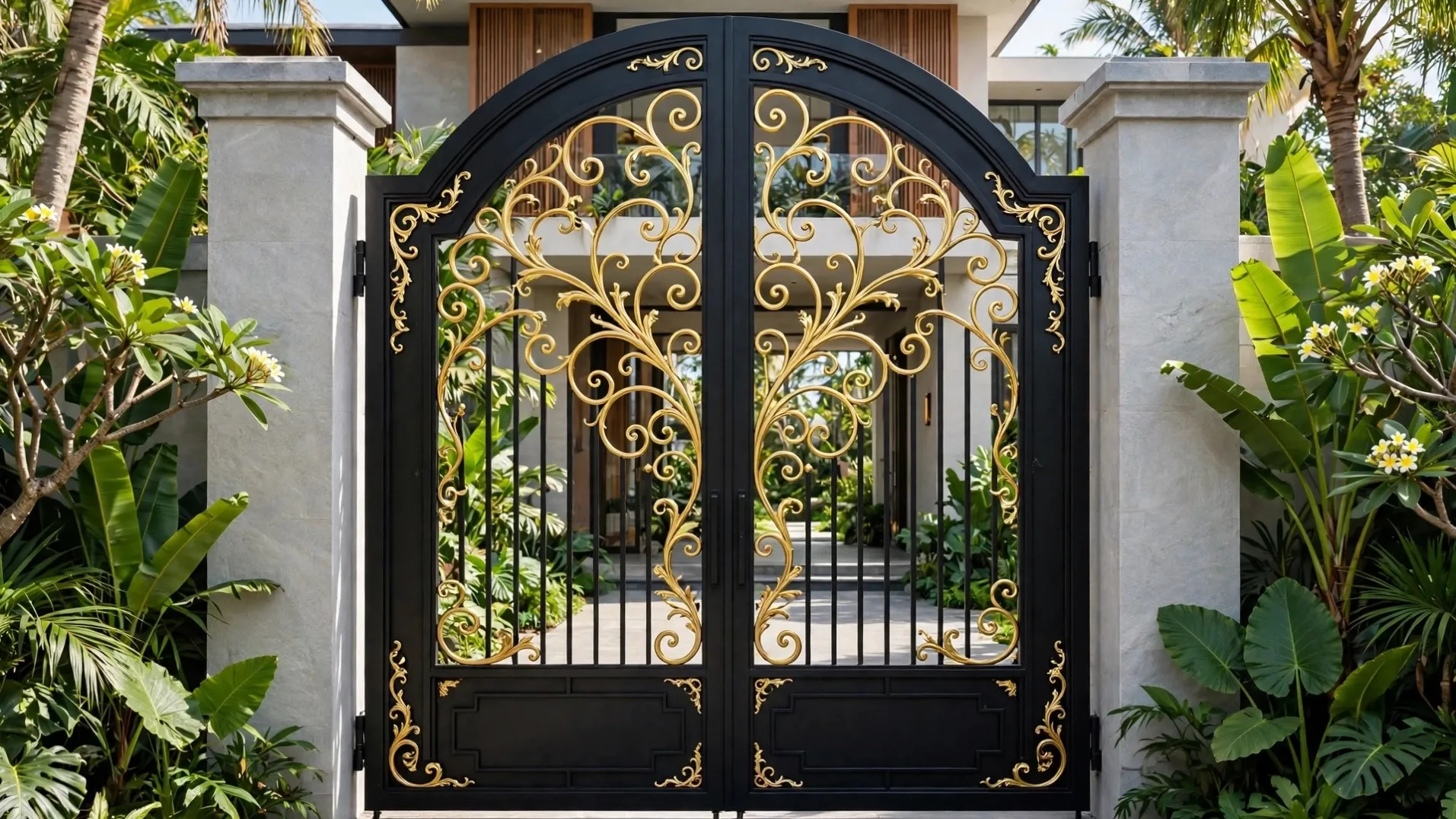
A solid balcony panel gives a hotel room or a villa terrace something an open railing cannot: privacy, shelter from the wind, and a calm, finished look. But the same solid face that blocks the view also catches the wind like a sail. On a sheltered ground-floor terrace that hardly matters; on a high-rise balcony or a coastal villa, it decides whether the panel stands for years or works loose in the first storm. A solid metal balcony railing panel can work on a windy site — but only when the panel, its fixings and its exposure have been judged together. This guide covers five checks: wind load, panel depth and relief, fixings and frame, material and finish, and when to choose solid over openwork.
1. A solid panel catches the wind — know the load first
An openwork railing lets most of the wind pass through. A solid panel does not, so the wind pushes against the full face of the panel and the force goes straight into the posts, the frame and the fixings. The load grows with building height and site exposure: a tenth-floor balcony faces far stronger gusts than a ground-floor terrace, and a coastal villa faces wind that carries salt as well as force. Corner balconies are the hardest case, because wind can strike them from two directions. Before you specify a solid metal balcony railing, ask three questions: how high is the balcony, how exposed is it, and what is the strongest wind it may face? The answers decide the panel thickness, post spacing and fixing method. A panel specified for a sheltered courtyard will not survive a seafront balcony. Balcony metal railings on upper floors also need the fixings checked against the structure behind them: a post bolted to a thin screed will fail long before the panel does.
2. Panel depth and relief change how wind behaves
A flat sheet is the worst shape for wind: it presents a smooth face and flexes under load. Embossed panels behave differently. The relief — the raised and pressed pattern in the metal — stiffens the sheet, so the same thickness bends less and holds its shape better, and a deep relief breaks up the wind across the face. That is why a dimpled stainless steel sheet feels far more rigid than a flat sheet of the same gauge, and why embossed panels suit a balcony that faces the weather. A piece such as the 3D Relief Wave Metal Wall Panel for Hotel Villa shows the principle: the wave relief is decorative, but it also gives the panel depth and stiffness a flat panel lacks. When you compare panels, ask for the relief depth as well as the thickness — a shallow pattern looks the same in a photo and behaves very differently in the wind. An embossed sheet with a clear, even relief will hold its shape; a flat sheet needs a heavier frame to do the same job.
3. Fixings and frames decide whether the panel stays put
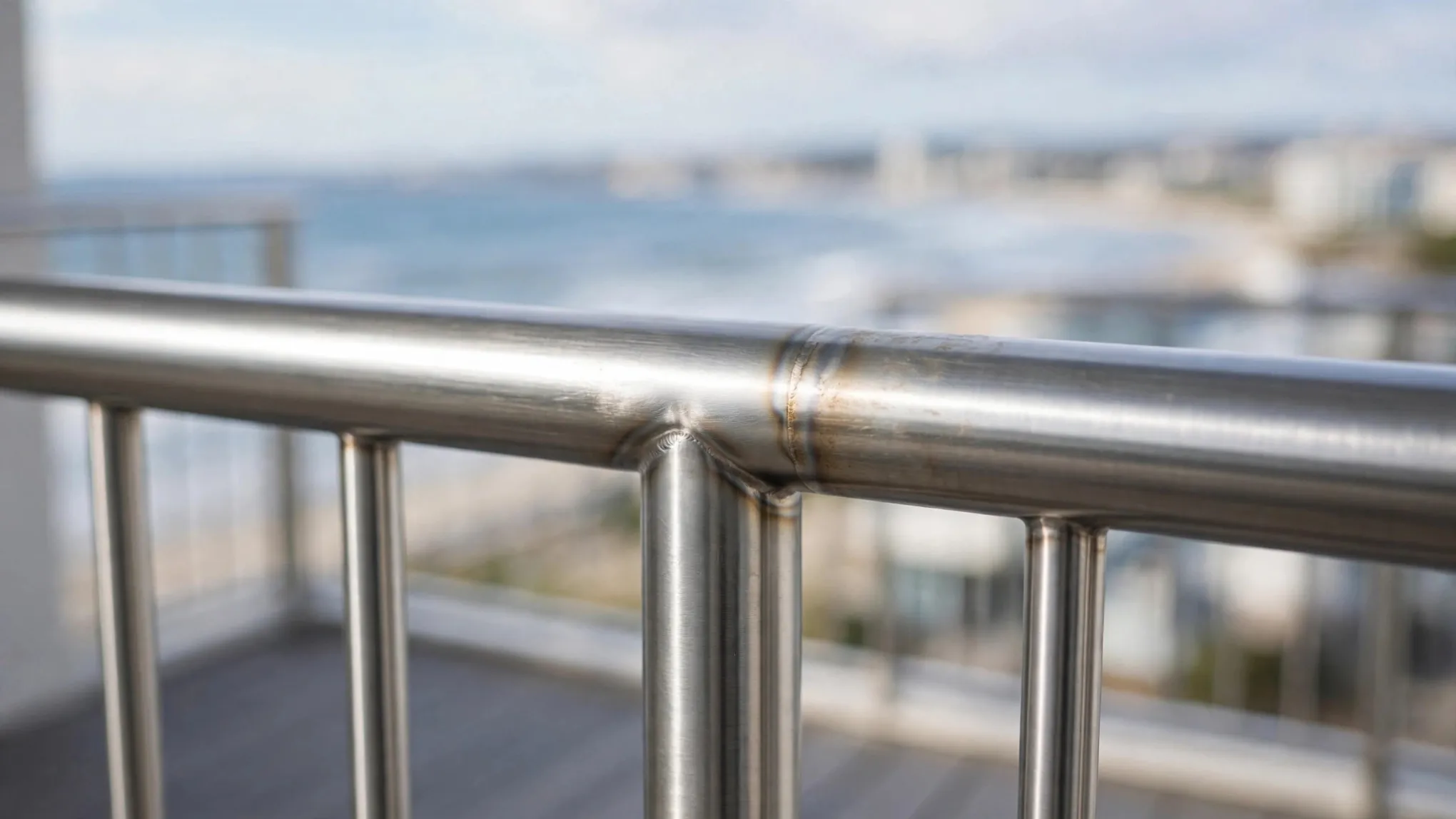
The panel is only as strong as the frame that holds it. On a windy balcony the fixings carry the whole wind load, so they deserve as much attention as the panel itself. Check the posts first: their spacing, their section, and how they are fixed to the structure. A post bolted through a concrete slab holds; a post fixed only to a thin tile or screed does not. Check the rails and panel fixings too: the panel should be held in a frame or by brackets at enough points that it cannot flex and work loose, with bolts sized for the load, not just for appearance. A balcony steel railing on an exposed site often needs closer post spacing and heavier brackets than the same design on a sheltered site, so ask the factory to confirm the fixing layout for the actual exposure rather than accepting a standard layout. A piece such as the 3D Wave Texture Embossed Metal Wall Panel shows why the frame matters: the wave texture gives the panel its look, but it still needs a frame and fixings that match the wind. Ask for the fixing details in the shop drawing and check them on site before installation.
4. Choose the material and finish for the exposure
Wind is only half the problem on an exposed balcony; the other half is what the wind carries. On a coastal site the air carries salt, which attacks some metals and finishes far faster than inland rain. Stainless steel is the usual choice for coastal balconies, and an embossed stainless steel sheet keeps the relief crisp and resists corrosion. For a high-rise city balcony, powder-coated aluminium is often enough and light. A zen embossed panel in a calm courtyard can use a softer finish; on a seafront balcony it needs a finish made for salt air. Ask the factory what finish it recommends for the site and how it is applied: a baked powder coating bonds firmly and stands up to daily weather, while a hand-painted colour needs checking for weathering. A piece such as the Chinese Landscape Embossed Metal Panel shows the range of finishes available, and the Chinese Mountain Landscape 3D Relief Metal Wall Panel shows how a deep relief holds its detail in an outdoor setting. Ask for a sample in the exact finish and leave it on the balcony for a few weeks before you order — a sample tells you more about weathering than any brochure.
5. Solid or openwork? Match the panel to the site
Solid panels are right for some balconies and wrong for others; the decision should follow the site, not the catalogue. Choose solid where the balcony is sheltered, low-rise or screened by other buildings, where privacy is the main requirement, and where the fixings can be made strong enough for the wind the site faces. Choose openwork where the balcony is high, exposed or coastal, where the wind load would need an oversized frame, or where the structure behind the fixings cannot take a solid panel's load. A middle option is a panel with a partial relief or a pierced pattern, giving some privacy and some wind relief for balconies that are exposed but still need screening. The Classical 3D Relief Metal Wall Panel suits a sheltered hotel balcony where the classical relief is the feature; the Geometric 3D Relief Metal Wall Panel suits a modern villa terrace, where the geometric pattern breaks up the wind and the view. Before you decide, stand on the balcony and feel the wind — a visit on a breezy day tells you more than a wind map. Then match the panel to what you felt.
A solid metal balcony railing panel can stand up to a windy site, but only when the wind load, panel depth, fixings, material and exposure have all been judged together. A flat sheet on light fixings will fail; a deep embossed panel on a proper frame, in the right material, will stand for years.
Kaiyubang is a custom metal engraving and metalwork factory in Foshan with more than 10 years of experience, and we make metal balcony railing panels to order for hotel and villa projects — solid and openwork designs in brass, bronze, copper, aluminium and stainless steel, made with CNC engraving and laser cutting and hand finishing, and checked before packing. Send your balcony drawings, measurements and site photos to vivianvee639@gmail.com or call +86 13715181867 for a shop drawing and a quote within 1 business day. Delivery is normally 2–4 weeks. Get the panel right for the wind it will face, and it will still be standing after the first storm season.