Stair Metal Railings Do Not Fit? Verify Site Dimensions
Stair metal railings that arrive the wrong size waste time and money. Measure the staircase, check fixing points and approve dimensions before fabrication.
Stair Metal Railings Do Not Fit? Verify Site Dimensions
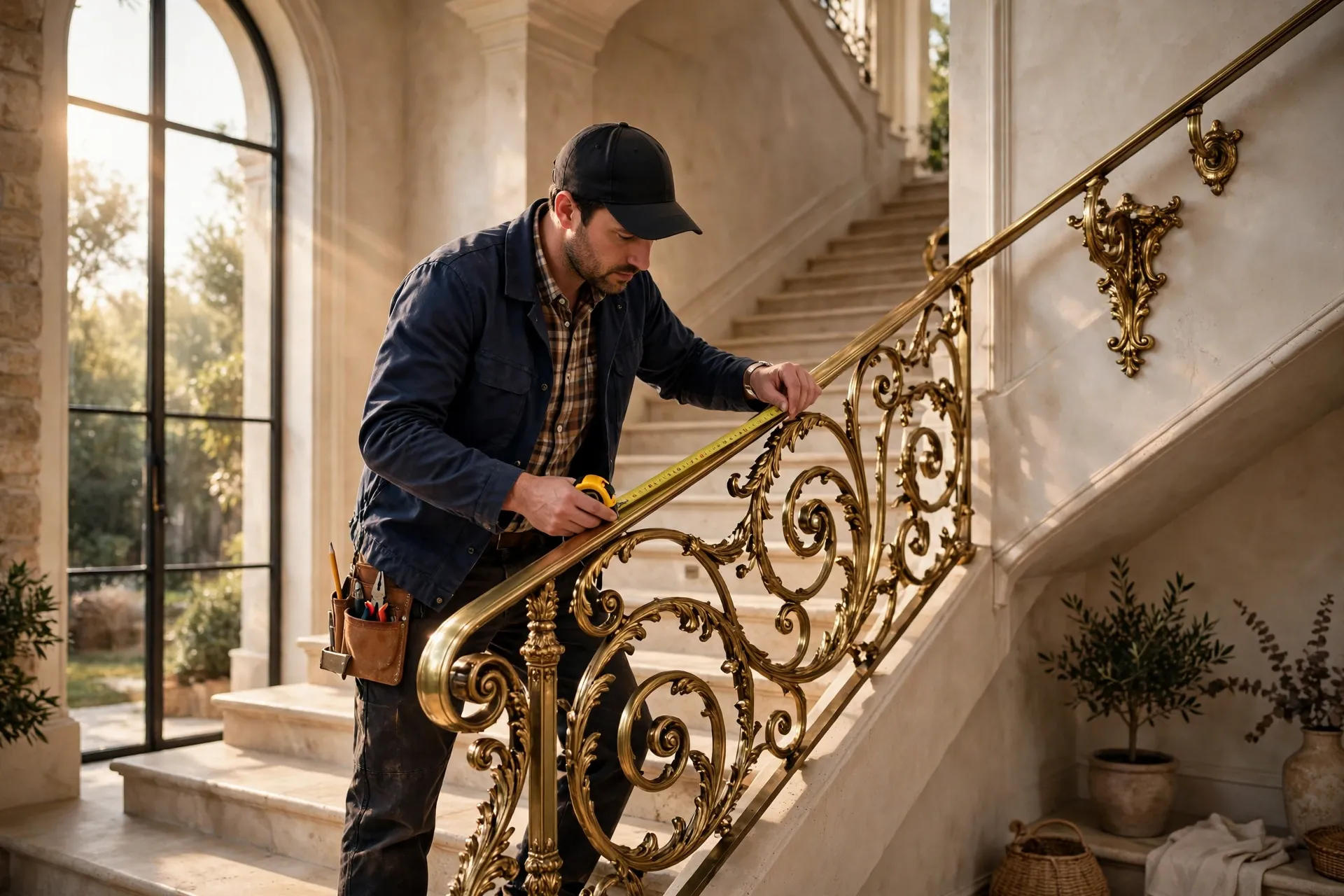
A staircase is built by several trades, measured at different times and finished in stages — so it is no surprise that stair metal railings are one of the most common custom items to arrive on site and not fit. The handrail is a few millimetres too long, a newel post lands on a tread that is not where the drawing said it was, or a wall bracket has nothing solid to fix into. Each problem is small on its own, but together they can delay a handover by days. The cause is rarely bad fabrication: a dimension was taken from a drawing and never verified against the staircase as built. This guide covers the five checks that stop that happening: measure the staircase yourself, confirm every fixing point, check the handrail height and grip, approve a full-size drawing, and plan installation day before the metal railings leave the factory.
1. Measure the staircase yourself, not only the drawing
A drawing shows the staircase as designed; the staircase as built is often slightly different: a tread is a few millimetres deeper, the floor-to-floor height has changed after screed and tiling, or the stringer sits further from the wall than planned. Any one of these differences is enough to make a made-to-measure metal railing for stairs miss its fixings. Measure on site, after the main structure and floor finishes are in place, and record the dimensions that decide the fit: the going and rise of each step, the total run, the floor-to-floor height, the width between the stringers, the rake angle, and the headroom above the stair. Measure twice, at both ends of the flight, and photograph each measurement with the tape in place so the factory can see exactly what was measured. A metal railing built from verified site dimensions fits first time; one built from a drawing alone is a guess.
2. Confirm every fixing point before the metal is cut
A handrail is only as secure as its fixing points, and those points must be confirmed before fabrication, not discovered on installation day. Walk the staircase and mark every fixing place: newel posts at the start, turns and landings, wall brackets along the flight, and each baluster base. Check what is behind each point. A bracket fixed into solid masonry holds well; the same bracket fixed into hollow plasterboard will pull out under load unless a proper anchor or backing plate is fitted. Check the treads too: a metal stairs railing on a stone tread needs a different fixing from one on a timber tread, and a railing on a glass or open-riser staircase needs its fixings planned around the structure, not the finish. A piece such as the Boutique Hotel Hammered Brass Fern Scroll Metal Railing shows why this matters: its scrollwork and hammered brass handrail are made to order, so the fixing points must be agreed before the scrolls are formed. Confirm the fixing method in writing with the factory, and note any point that needs a special anchor.
3. Check handrail height and grip along the whole flight
A handrail that is comfortable at the bottom of a flight and awkward at the top has not been checked along its full length. The height is measured from the nosing line of the treads, and it must stay consistent as the staircase rises, turns and lands. Check the height your project specifies — often around 900 mm above the nosings — against the actual treads, and confirm it against the local building rules. Check the grip as well: metal hand railings should feel secure in the hand, with a profile that is easy to hold along the whole flight, including at turns and landings. A stair handrail iron profile that is too flat, too wide or too smooth can look right and feel wrong, so ask for a sample of the profile before you approve the order. A piece such as the Two Tone Brass Chinese Landscape Metal Railing shows how profile and pattern work together: the landscape relief is part of the design, but the handrail must still be comfortable to grip for its full length. On a landing, check the handrail continuity too — a break in the rail at a turn is where most grip complaints start.
4. Approve a full-size template or shop drawing
Before any metal is cut, ask the factory for a shop drawing or a full-size template and approve it in writing — the last cheap chance to catch a mistake. Check the overall length and height against your site measurements, the position of every newel post and bracket, and that the scroll or relief pattern lines up at the joints: a pattern that is beautiful mid-flight and broken at a joint looks like a mistake. The Vintage Bronze Landscape Relief Metal Railing shows why this step matters: its landscape relief runs along the flight, so the drawing must show exactly where each section of the relief starts and ends. A dark finish such as the Matte Black Brass Dragon Cloud Metal Railing also needs the drawing to show the finish clearly, because matte black shows every mark and joint. Treat the approved drawing as the contract for the work: once it is signed, the factory builds to it, and any change after that costs time and money. Keep a copy on site so the fitters can check the delivered sections against it.
5. Plan delivery, access and installation day
A staircase handrail is often delivered in long sections, and those sections have to reach the staircase. Check the access route before delivery day: corridor and doorway widths, turning space on landings, and whether a long section can be carried up the stairs or must be lifted through a window or over a balcony. For an exterior staircase, a metal stair railing outdoor section must also be checked against the route from the delivery vehicle to the steps, and stair railing outdoor metal fixings confirmed for the outdoor exposure. For a hotel or villa project, outside metal railings on terraces and entrance steps need the same access check, because a section that cannot be carried to its position will be cut on site — and a site cut rarely matches the factory finish. Agree the installation sequence with the factory: which sections go in first, and how the finished work will be protected until handover. A piece such as the Antique Copper Baroque Scroll Metal Railing has scroll ends that are easily damaged in transit, so agree its packing and handling in advance; the same applies to the Grand Mansion Dark Bronze Trellis Pattern Metal Railing, whose trellis pattern needs protection at the edges.
Metal railings that fit first time are not luck — they are the result of five checks done before fabrication. Measure the staircase as built, confirm every fixing point, check the handrail height and grip along the whole flight, approve a full-size drawing in writing, and plan delivery and installation before the metal leaves the factory.
Kaiyubang is a custom metal engraving and metalwork factory in Foshan with more than 10 years of experience, and we make metal railings to order for hotel and villa projects — stair railings, balcony railings and handrails in brass, bronze, copper, aluminium and stainless steel, made with CNC engraving and laser cutting and hand finishing, and checked before packing. Send your staircase drawings, site measurements and reference photos to vivianvee639@gmail.com or call +86 13715181867, and we will prepare a shop drawing and a quote within 1 business day. Delivery is normally 2–4 weeks. Get the dimensions right, and the railing will fit the staircase it was made for.