Sep 17, 2026 Choose Guiding
Why Do We Carve? The Meaning of Metal Engraving | Kaiyubang
Why do humans carve stone, wood and metal? Discover how metal engraving transforms ordinary materials into signs, plaques, gates and meaningful objects.
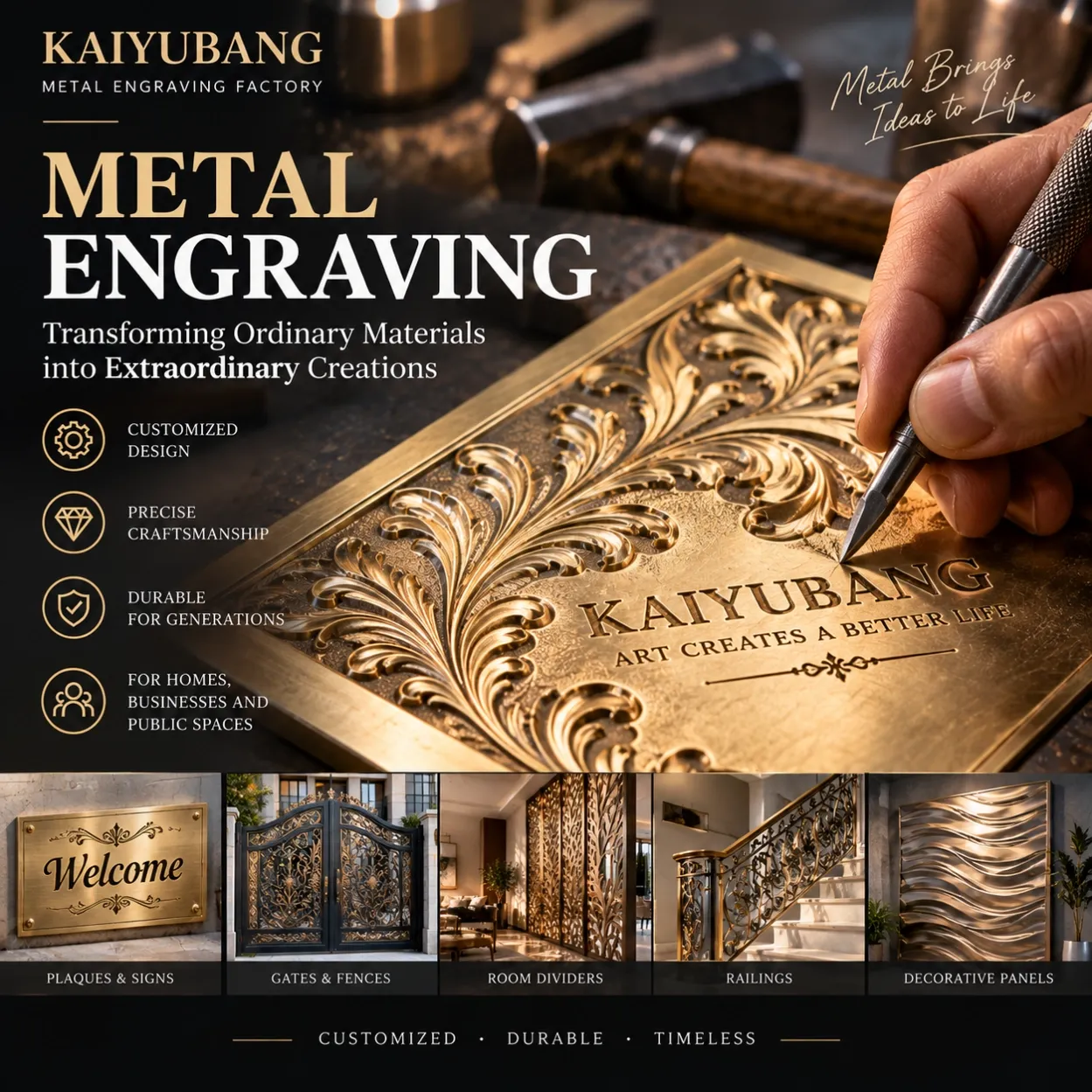
There is an old Chinese saying: “玉不琢,不成器” — jade must be carved before it can become something of value.
A piece of jade begins as stone. Yet through cutting, grinding, polishing and carving, that ordinary-looking material can become a pendant, an ornament, a family keepsake or an object carrying personal meaning.
This idea reaches far beyond jade.
Humans carve stone. We carve wood. We engrave brass, bronze, stainless steel and other metals. From etched metal nameplates and an engraved brass sign to architectural gates and decorative panels, carving allows us to turn a material into something that communicates identity, memory, craftsmanship and beauty.
So what is the real meaning of carving?
Perhaps carving is simply the human desire to transform what exists into what we imagine.
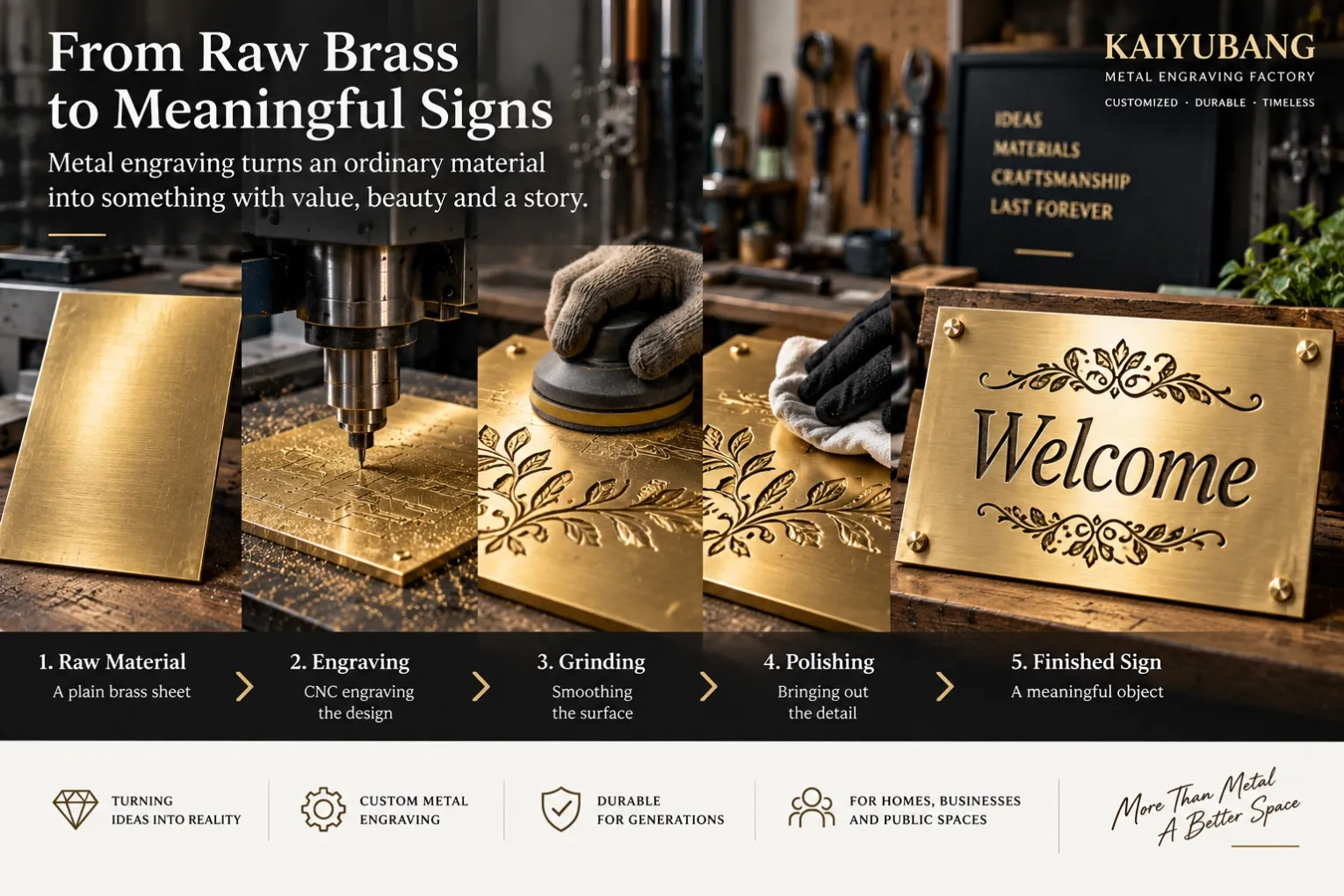
From Raw Material to Meaning: Why Humans Carve
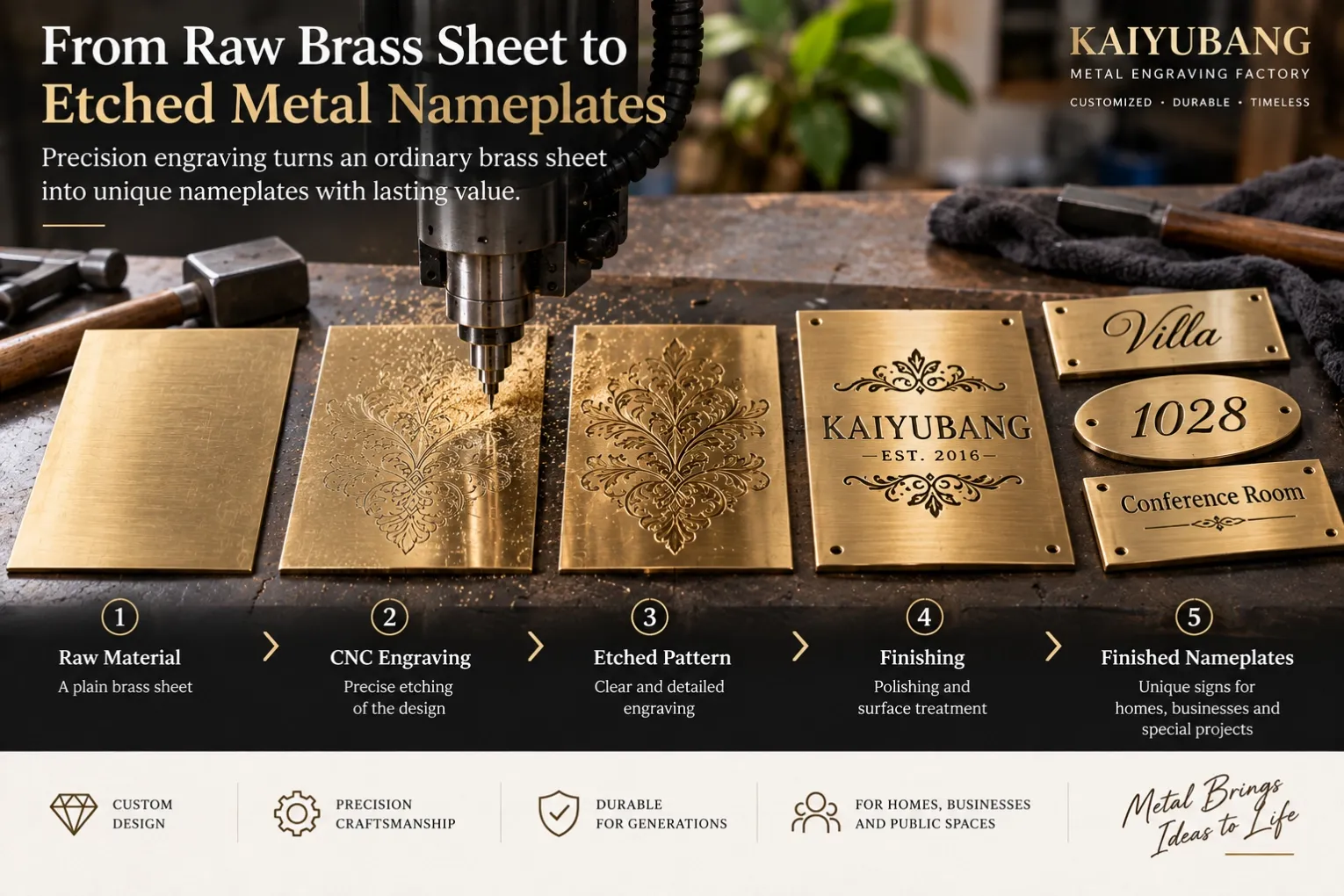
Before a craftsman begins, a sheet of brass is simply brass. A stainless steel plate is simply a piece of metal. A block of stone is only stone.
The material already has physical value, but craftsmanship can give it another layer of value: meaning.
A blank brass sheet can become a brass welcome sign at the entrance of a home.
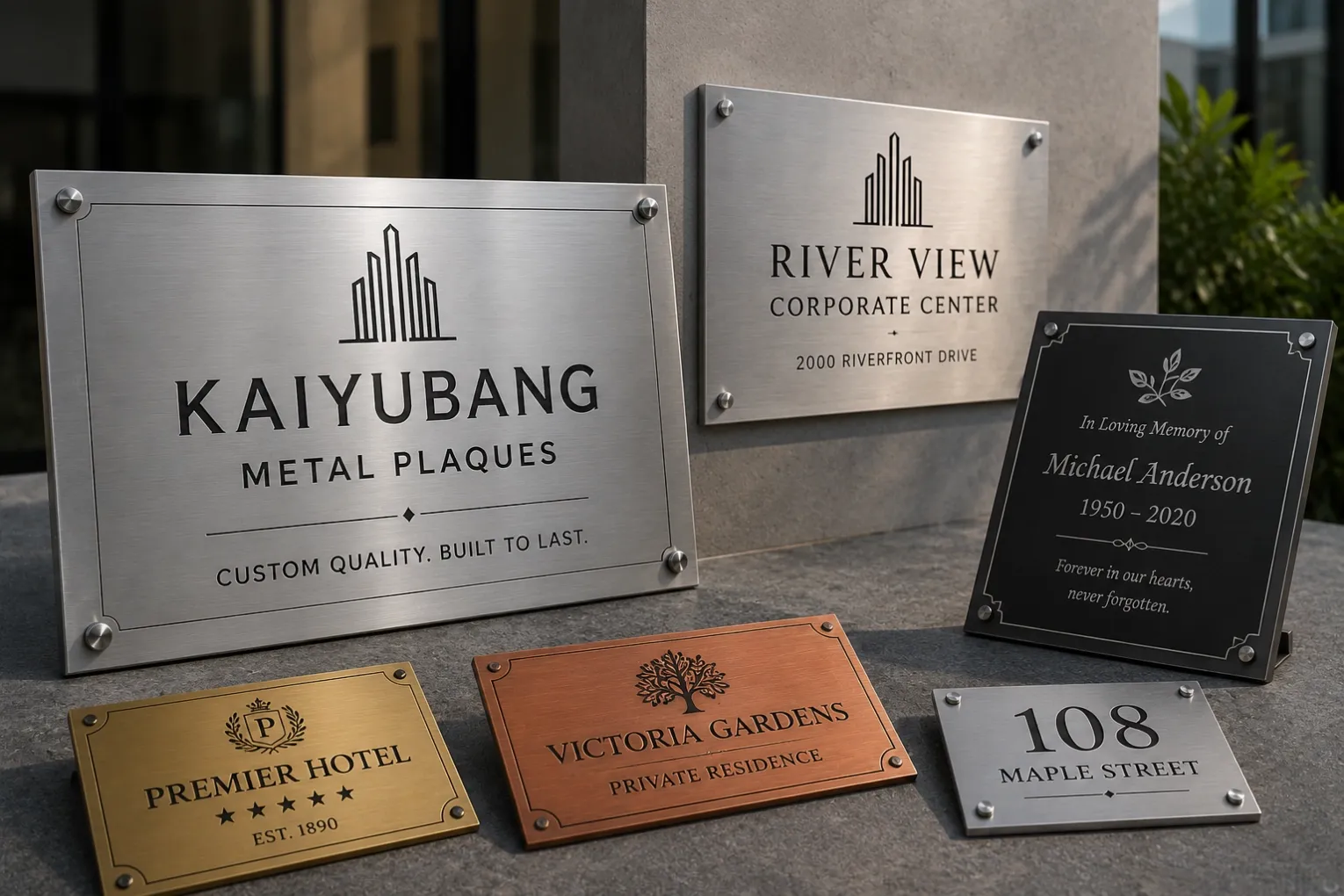
A piece of stainless steel can become one of the stainless steel memorial plaques used to preserve a name, date, dedication or story.
A bronze plate can become an architectural marker that remains attached to a building for decades.
The Smithsonian American Art Museum describes direct carving as a process in which artists work directly with materials such as stone or wood. Its discussion of the “truth of materials” is particularly interesting: the physical characteristics of a material can remain visible and become part of the final artistic form.
That concept also applies to metal craftsmanship.
Instead of hiding the characteristics of brass, bronze, copper or stainless steel, good metalwork can use their color, texture, reflectivity and aging characteristics as part of the design.
Carving does not simply remove material.
It reveals possibilities within the material.
Why Do Beautiful Objects Matter in Everyday Life?
If an ordinary object already performs its function, why do we care how it looks?
A house number only needs to show an address.
A gate only needs to open and close.
A railing only needs to provide support and protection.
A wall divider only needs to divide space.
Yet throughout history, people have repeatedly chosen to decorate functional objects.
Why?
Because we do not experience our surroundings only through function. We also experience them visually and emotionally.
Compare a plain address plate with a carefully designed engraved metal plaque. Both may display exactly the same number, but they do not create the same impression.
This is why homeowners may choose custom vertical address plaques in Florida, designers may specify decorative metal room dividers, and architects may use a metal divider wall as an intentional part of an interior rather than merely as a partition.
Beauty gives ordinary functions character.
Engraved Brass Signs and Metal Plaques: Giving Identity to a Place
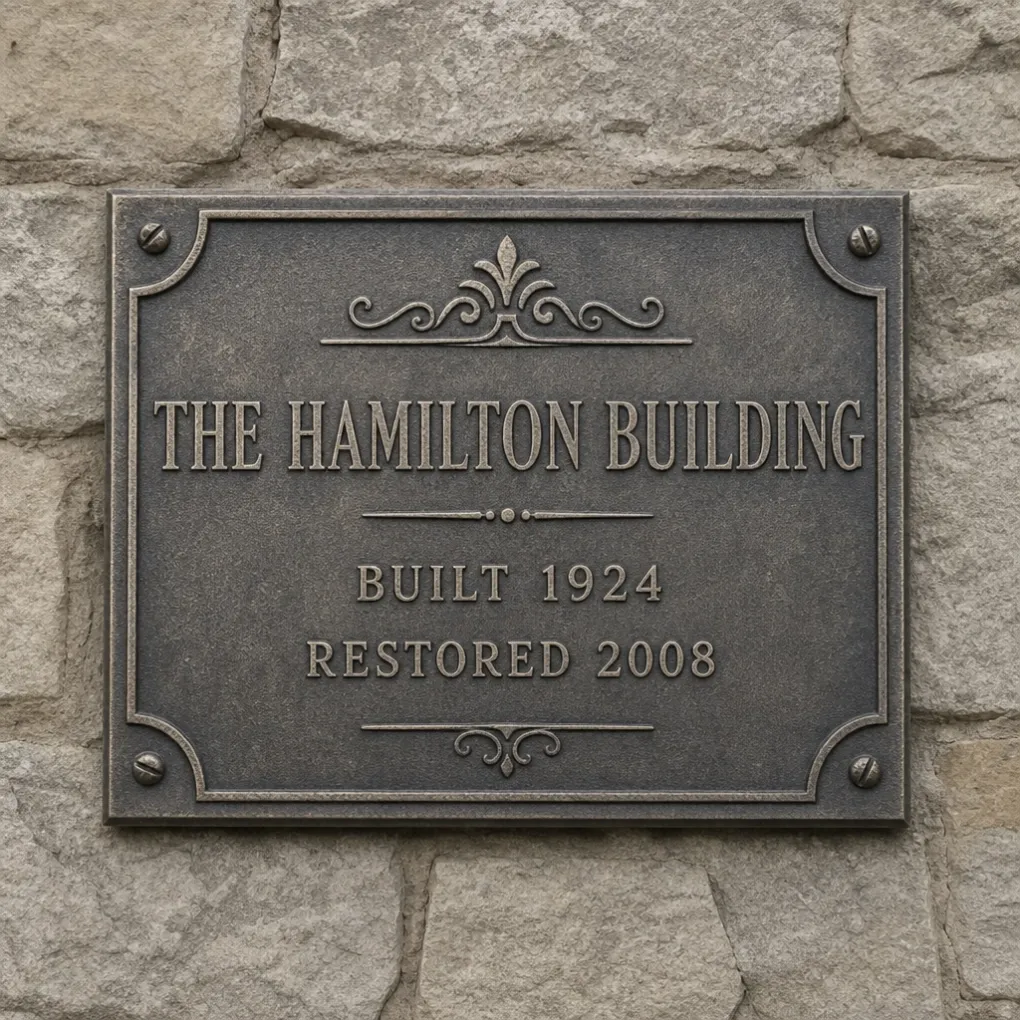
One of the clearest examples of meaningful carving is the plaque.
A plaque can identify a room, recognize a person, explain the history of a building or welcome someone into a home.
The information may consist of only a few words, yet material and craftsmanship change the way those words are perceived.
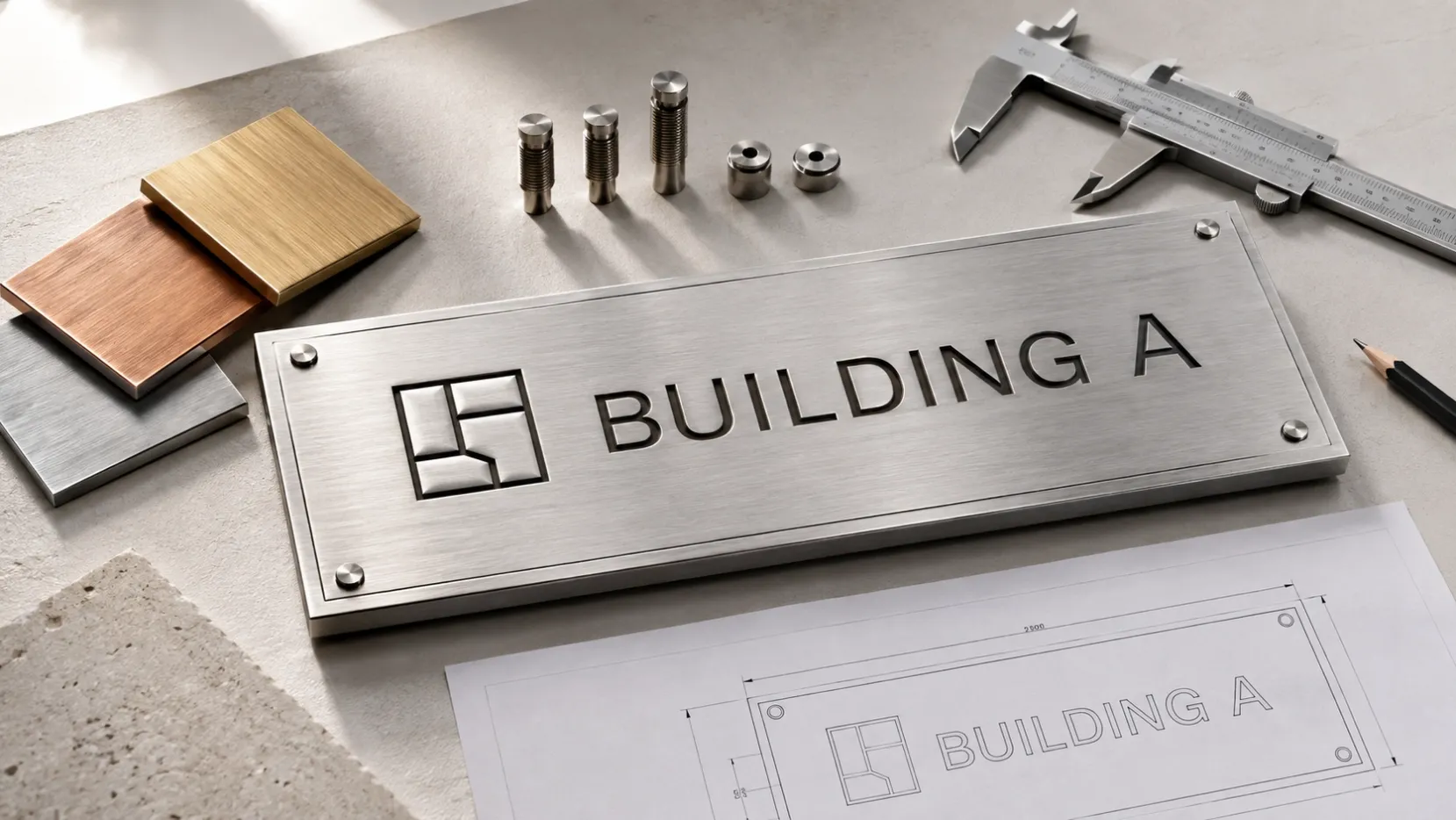
Consider an engraved brass sign mounted outside a conference room. The text provides information, but the brushed surface, engraved lettering, proportions and finish contribute to the identity of the space.
The same principle applies to personalized plaques.
People searching for custom plaques in Montgomery County PA or personalized plaques in Montgomery County PA may have very different applications in mind, but the underlying need is similar: they want a physical object made for a particular person, property, organization or purpose.
Mass-produced objects communicate function.
Personalized objects can communicate identity.
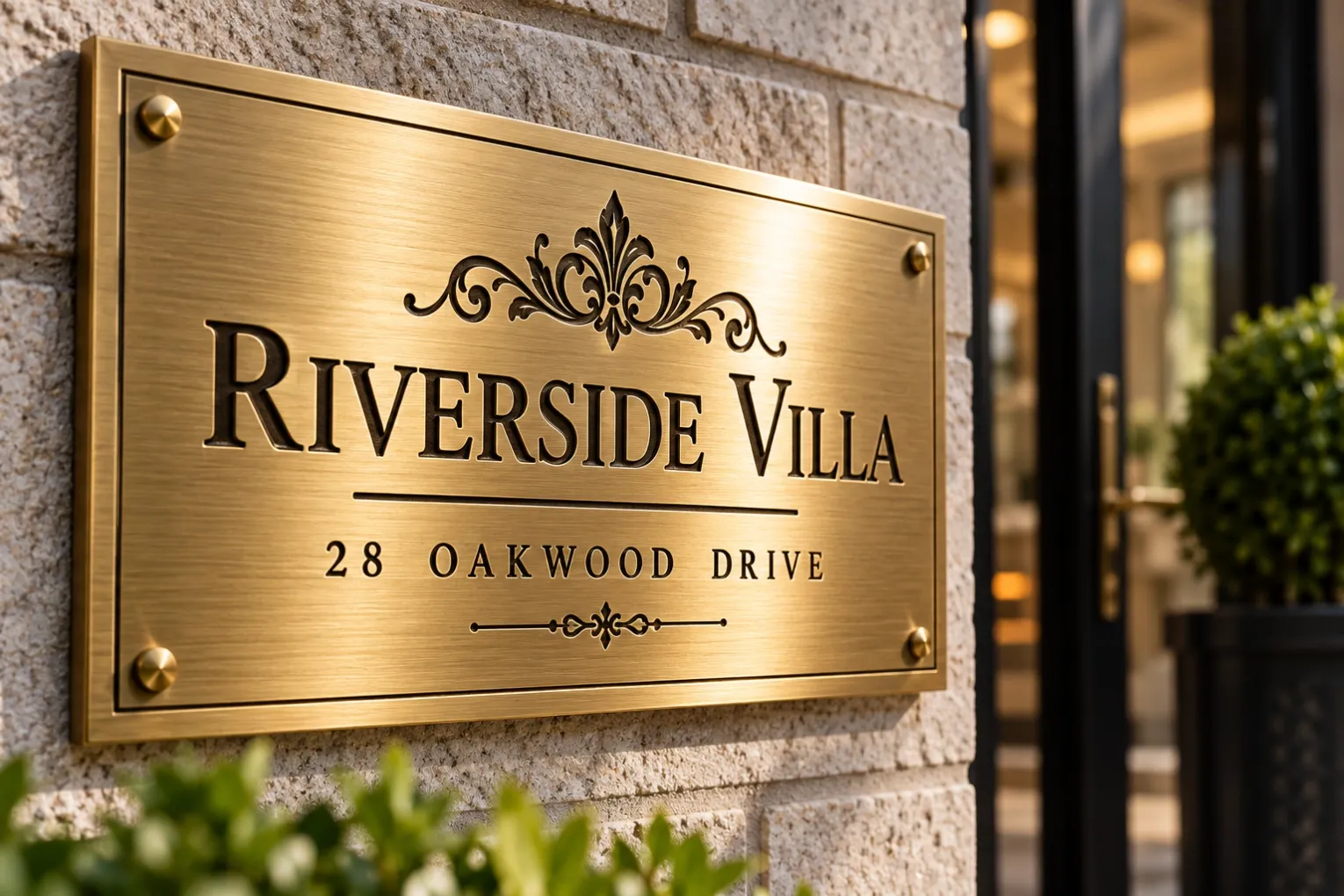
From Ground Plaques to Memorial Plaques: Carving as Memory
Carving has another important quality: permanence.
Ink can fade. Paper can tear. Digital information can disappear from a screen.
Metal, when properly selected, finished and maintained for its environment, can provide a durable physical medium for names, dates, symbols and inscriptions.
That is why ground plaques, building plaques, dedication plates and stainless steel memorial plaques are often designed with longevity in mind.
The meaning comes not only from the metal itself but from what has been permanently placed into its surface.
A name engraved into metal is different from a name temporarily printed on paper.
The material gives the message physical presence.
Decorative Metal Panels: When a Surface Becomes an Experience
Carving does not always need words.
Sometimes texture itself becomes the language.
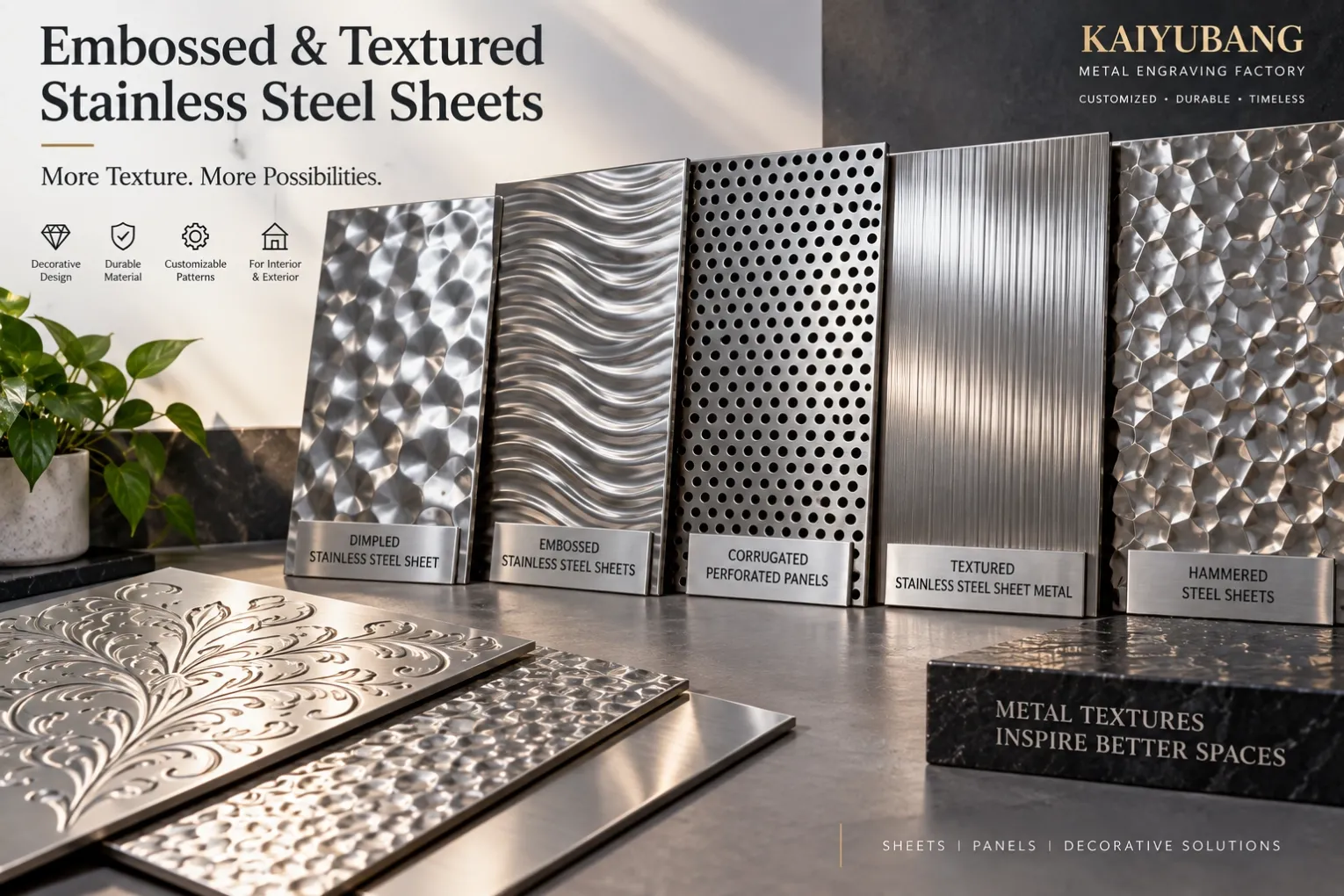
A flat sheet can be embossed, hammered, perforated, engraved or formed into a dimensional surface. Products such as embossed stainless steel sheets, textured stainless steel sheet metal, hammered steel sheets, hammered bronze sheet metal, corrugated perforated panels and a dimpled stainless steel sheet demonstrate how dramatically surface treatment can change the perception of metal.
A completely flat sheet can feel industrial.
Add controlled texture, relief, repetition and light, and the same material begins interacting with its environment.
A zen embossed panel, for example, can use restrained patterns and dimensional surfaces to create visual rhythm without requiring complicated imagery.
This is an important part of carving and metal decoration: sometimes the goal is not to create an object on the surface, but to make the surface itself become the object of interest.
Decorative Metal Room Dividers: Carving Light and Shadow
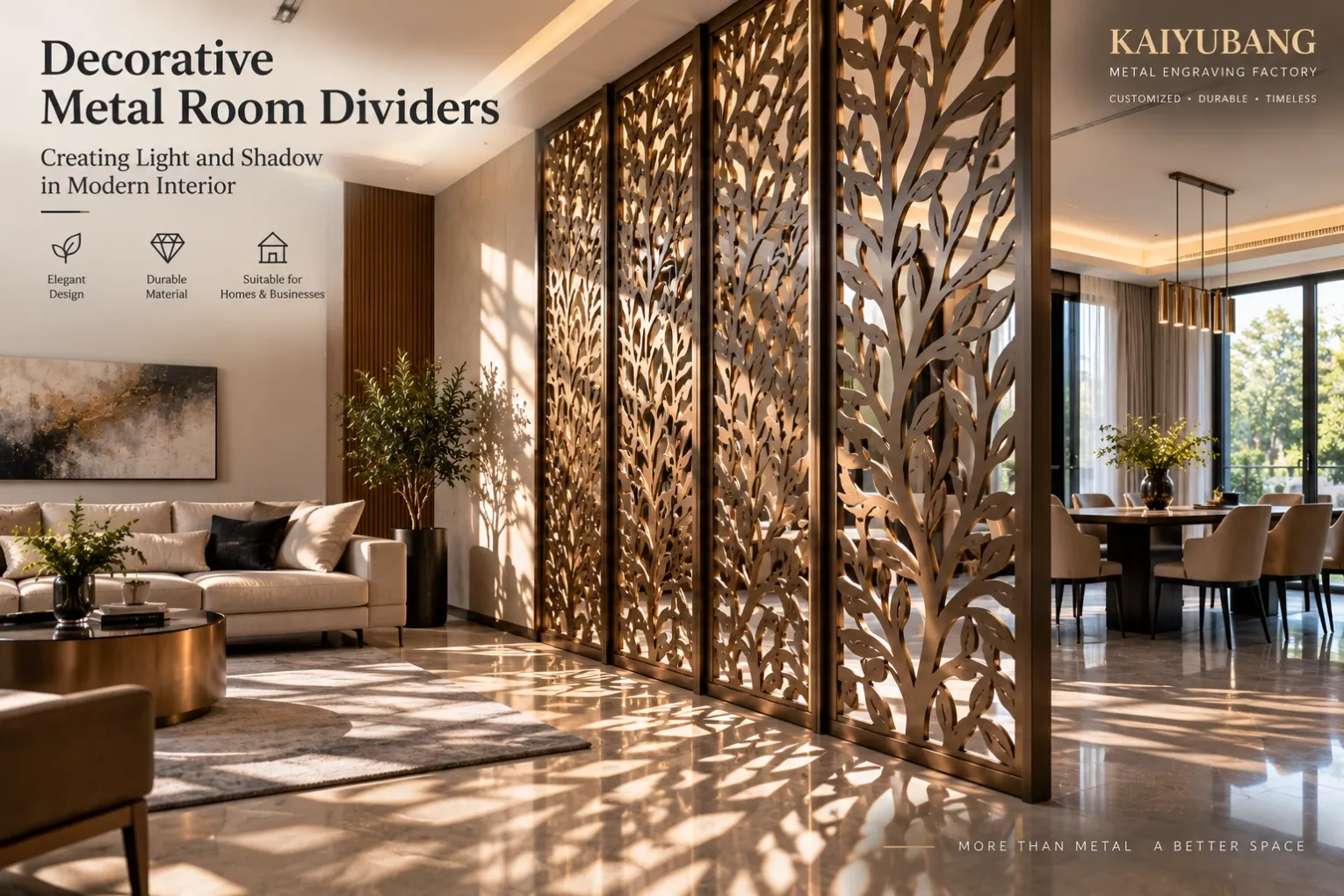
A particularly interesting transformation happens when carving passes completely through the material.
With hollow carving, CNC cutting or laser cutting, solid metal becomes negative space.
This is the principle behind many decorative metal room dividers, screens and architectural panels.
During the day, openings allow light to travel through the design. As the viewing angle changes, the relationship between solid metal, empty space and shadow changes as well.
The material is no longer simply a wall.
It becomes a visual boundary.
This is why a decorative metal divider wall can simultaneously provide separation, partial privacy and architectural character.
The craftsman is shaping metal, but in a sense, he is also shaping light.
Decorative Metal Fence Panels and Gates: Why Entrances Become Art
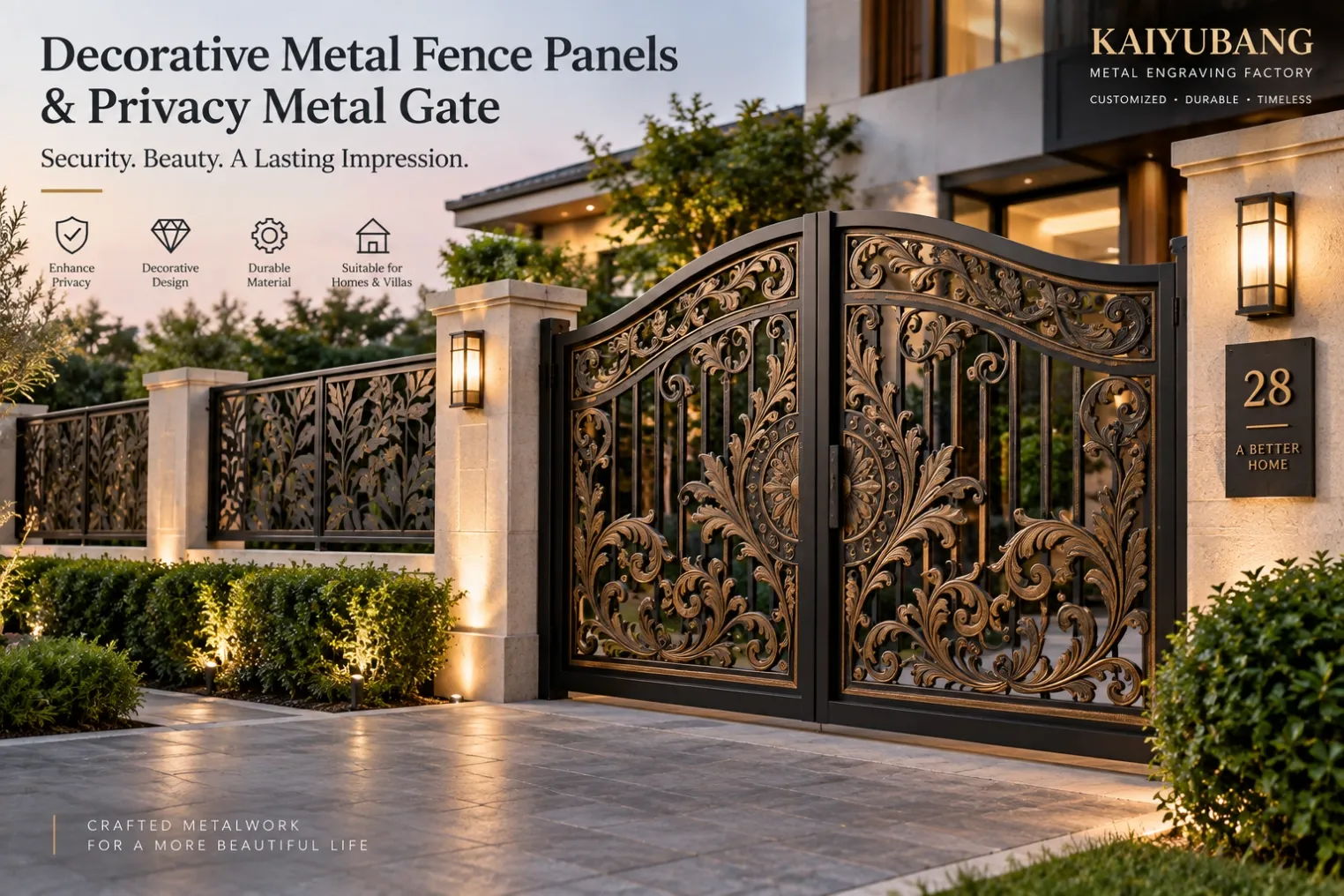
The same transformation can happen on a much larger scale.
Consider a driveway gate.
At its most basic level, a gate controls access to a property. But homeowners, hotels, villas and landscape designers often expect an entrance to do more than that.
A privacy metal gate can provide security while contributing to the architectural identity of a property. Decorative metal fence panels can repeat motifs found elsewhere in the landscape or building façade.
Even manual driveway gates can become visual focal points through proportion, relief, ornamental metalwork and finishing.
The same applies to a metal pedestrian gate. Although physically smaller than a driveway gate, it is often the point through which visitors directly enter a property.
That makes the entrance part of the experience.
Modern Wrought Iron Double Doors: Function Becomes Character
Doors provide another example of how craftsmanship changes ordinary objects.
A double wrought iron door has an obvious practical purpose, but design choices can dramatically alter its character.
Traditional scrollwork may create a classical impression, while modern wrought iron double doors can use restrained geometry, straight lines and negative space.
Search phrases such as double door wrought iron and iron doors double often describe similar products, but behind those searches is a much more human question:
What should the entrance to this building feel like?
Strong?
Elegant?
Traditional?
Modern?
Welcoming?
Private?
Craftsmanship provides a way to answer those questions through material rather than words.
Metal Railings: Why Safety Does Not Have to Look Ordinary
Railings demonstrate the same relationship between function and aesthetics.
A metal post for railing is fundamentally structural. A metal horizontal railing organizes protective elements into a practical system.
But the designer can go further.
A black metal railing interior can become part of a contemporary staircase composition, while metal mesh railing can provide a different balance between transparency, enclosure and texture.
The safety requirement remains.
What changes is the experience.
This distinction matters because architecture surrounds us every day. We touch handrails, walk through doors, pass gates and look at walls without consciously thinking about them.
Good design makes these necessary objects worth noticing.
From Stainless Steel Stalls to Decorative Architecture
Even highly functional environments demonstrate our desire to improve ordinary materials.
Products such as stainless steel stalls are selected primarily for practical reasons, and searches for stainless steel toilet partitions pricing are usually strongly cost-oriented.
Yet even here, surface finish, fabrication accuracy, edge treatment and hardware design influence how users perceive the space.
This illustrates an important point:
Beauty is not limited to art galleries.
Design exists wherever people interact with manufactured objects.
A workshop, hotel, office, restaurant, home or public building can all benefit from materials that have been thoughtfully shaped and finished.
What Does a Craftsman Actually Add to Metal?
Imagine two identical brass sheets placed on a workbench.
One remains untouched.
The other is cut, engraved, polished, colored and finished by an experienced craftsman.
Their chemical composition may still be nearly identical.
Their meaning is not.
The craftsman has added something that cannot be measured simply by weighing the metal.
He has added design, time, skill and intention.
At Kaiyubang, metal can pass through multiple processes depending on the design: CNC engraving, relief carving, hollow carving, welding, grinding, polishing, coloring and protective finishing.
Each stage moves the material farther away from being a generic sheet and closer to becoming a specific object created for a specific place.
Carving Is a Conversation Between Material and Human Intention
One of the most beautiful ideas in traditional craftsmanship is that the maker does not completely dominate the material.
Different materials respond differently.
Stone has grain and hardness.
Wood has fibers and natural patterns.
Brass has warmth.
Copper changes character as its surface ages.
Stainless steel can create a clean, precise architectural appearance.
The Smithsonian American Art Museum notes that direct carvers sometimes allowed the natural properties of their chosen material to influence the final design. This relationship between material and maker remains relevant to contemporary craftsmanship.
A good craftsman asks not only:
“What do I want to make?”
but also:
“What can this material become?”
The Meaning of Carving: Making the Ordinary Worth Remembering
So, what is the meaning of carving?
It is not merely cutting away material.
Carving is transformation.
A stone becomes a pendant.
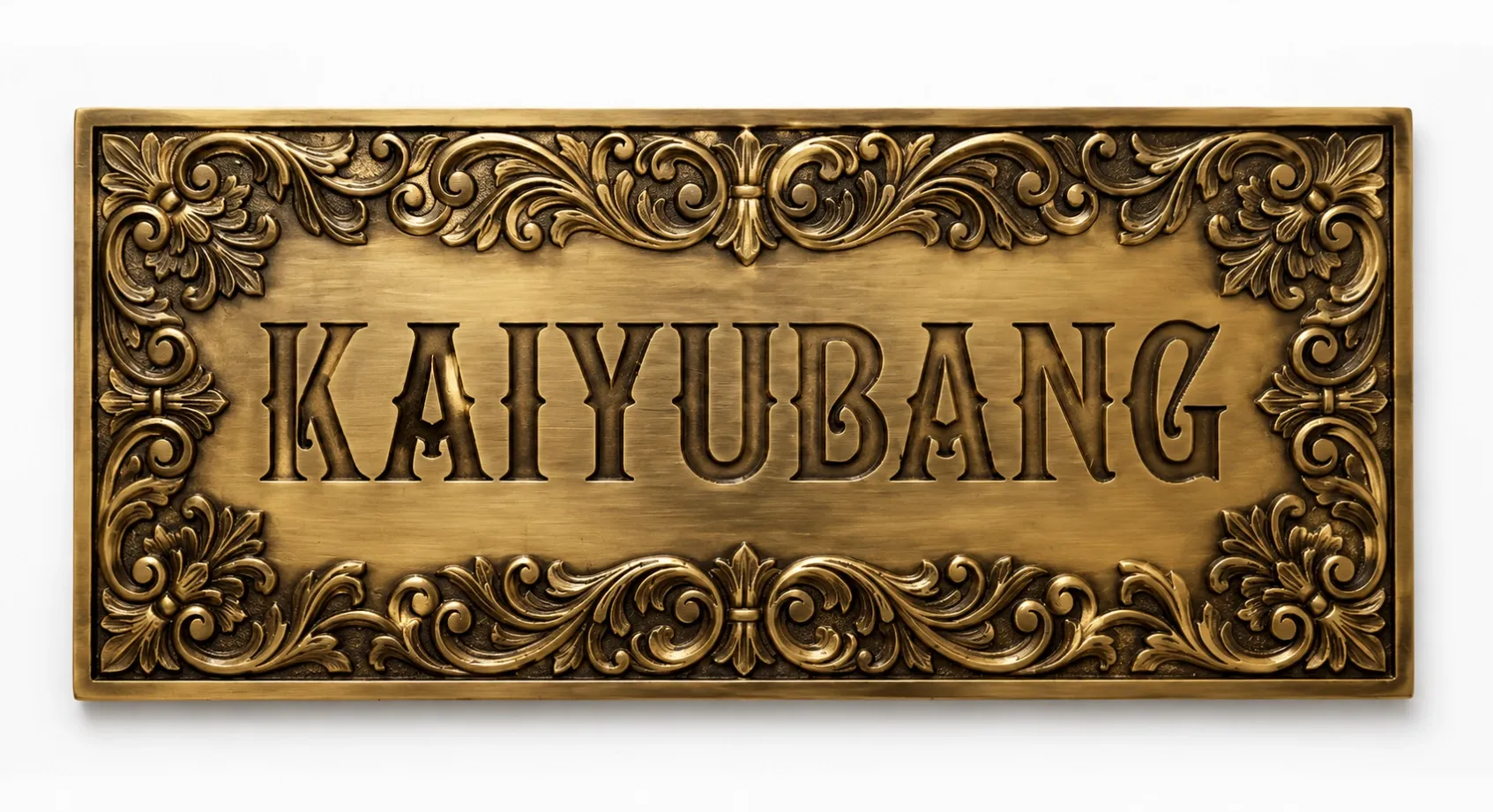
A brass sheet becomes an engraved brass sign.
A stainless steel plate becomes a memorial.
A plain metal sheet becomes a decorative panel.
A structural barrier becomes a beautiful railing.
A security gate becomes part of a home's architectural identity.
And an ordinary piece of metal can become something that represents a person, a place, a memory or an idea.
This brings us back to the old Chinese saying:
“玉不琢,不成器.”
Jade must be carved before it becomes something greater than the stone from which it began.
Perhaps that is why human beings continue to create beautiful things.
We do not need every object around us to be beautiful in order to survive.
But beauty helps transform a place into our place, an object into our object, and a material into something capable of carrying memory and meaning.
That is why we carve.
And that is why, from ancient stone and wood carving to modern etched metal nameplates, decorative metal panels, engraved plaques and architectural gates, craftsmanship continues to matter.