Aug 18, 2026 Choose Guiding
Where Should House Numbers Be Displayed? | Kaiyubang
Where should house numbers be displayed? Explore smart placement ideas and discover custom metal house number signs designed for visibility and style.
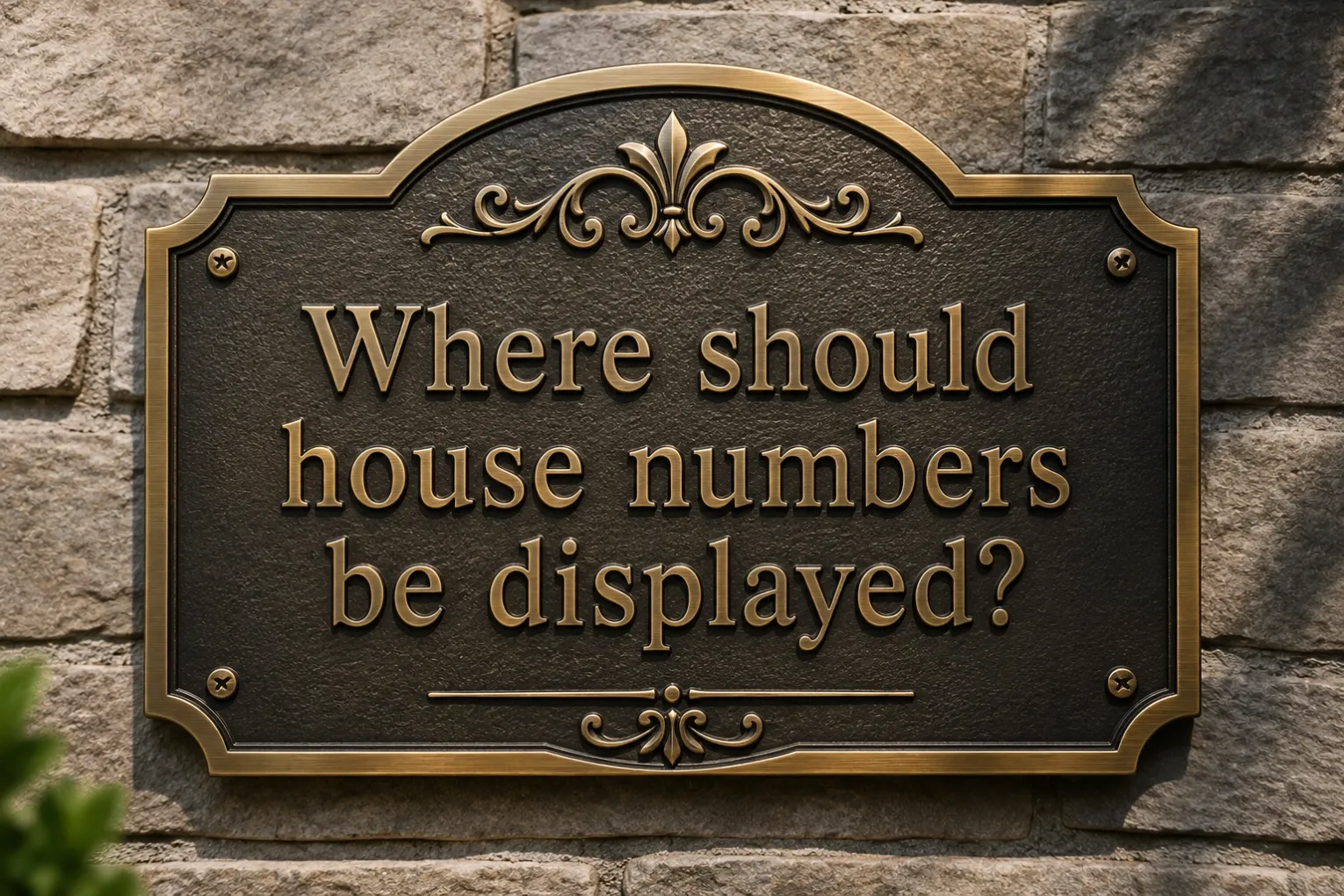
Where Should House Numbers Be Displayed? | Kaiyubang
Meta Description:
Where should house numbers be displayed? Learn the best locations, visibility rules, sizes and stylish house number sign ideas for modern homes.
House numbers may seem like a small exterior detail, but their location can make a significant difference. Well-placed house numbers help visitors, delivery drivers and emergency responders identify a property quickly while also adding a finishing touch to the exterior design.
If you are choosing numbers for front of house, the most important rule is simple: they should be easy to see from the street without sacrificing the architectural style of your home.
For homeowners, designers and project buyers looking for a more permanent solution, a custom house number plate can combine address identification with exterior decoration.
Recommended Internal Links Near the Beginning
- house numbers → Kaiyubang homepage
- house number signs → House Number Signs category page
- custom house number plate → Relevant high-quality product or guide page
Where Should House Numbers Be Displayed?
The best position for house address numbers is generally on the part of the property that can be clearly seen from the street or primary approach.
According to the International Code Council's 2024 International Fire Code, address identification should be legible, visible from the street or road fronting the property, and contrast with its background. The code also states that additional identification may be required when necessary to facilitate emergency response.
This makes visibility the first consideration when deciding where to install address numbers on house exteriors.
Common locations include:
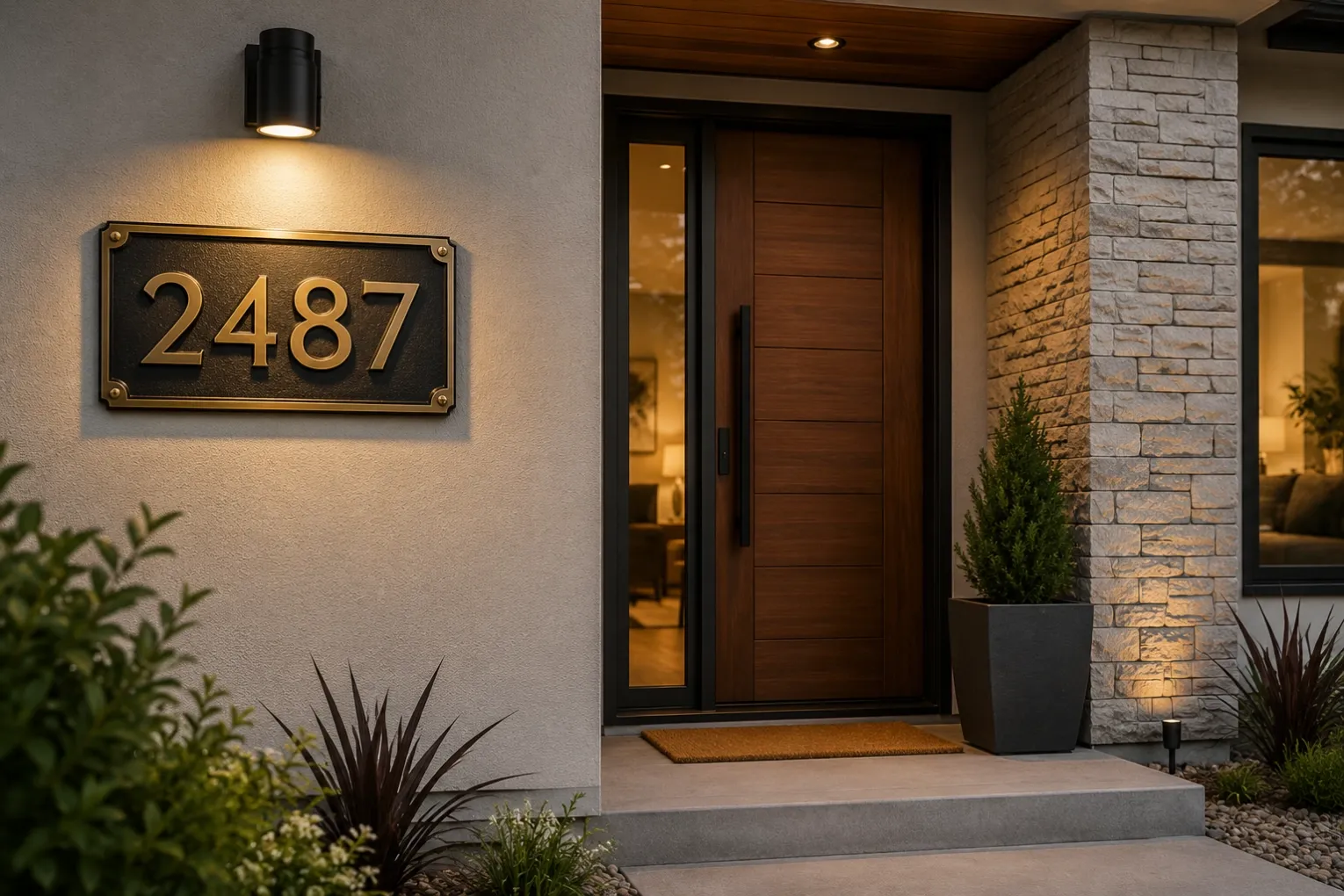
Beside the front door
Above the front entrance
On a porch column
On the garage wall
On a gate or entrance wall
On a mailbox or mailbox post where appropriate
On a freestanding house number post
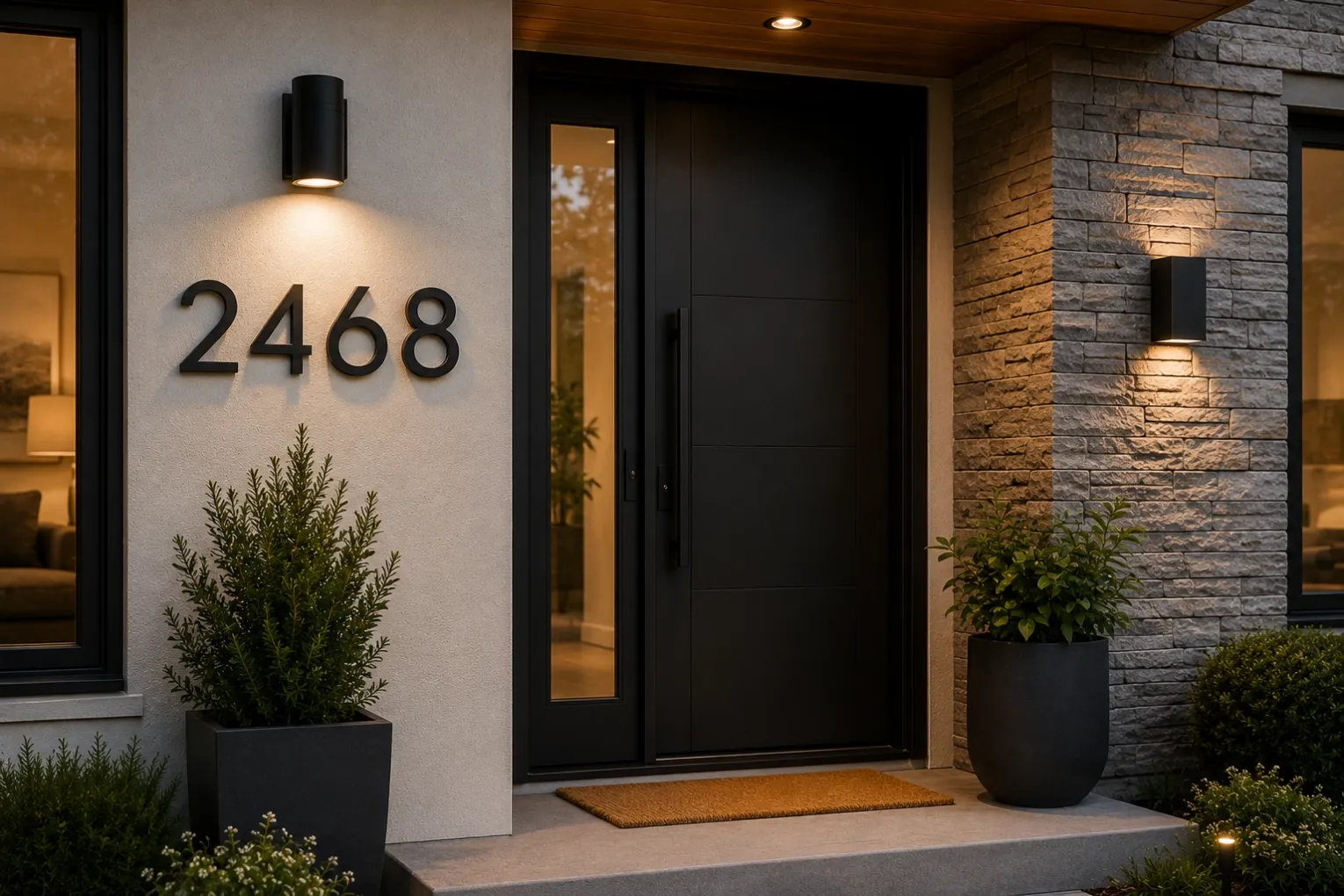
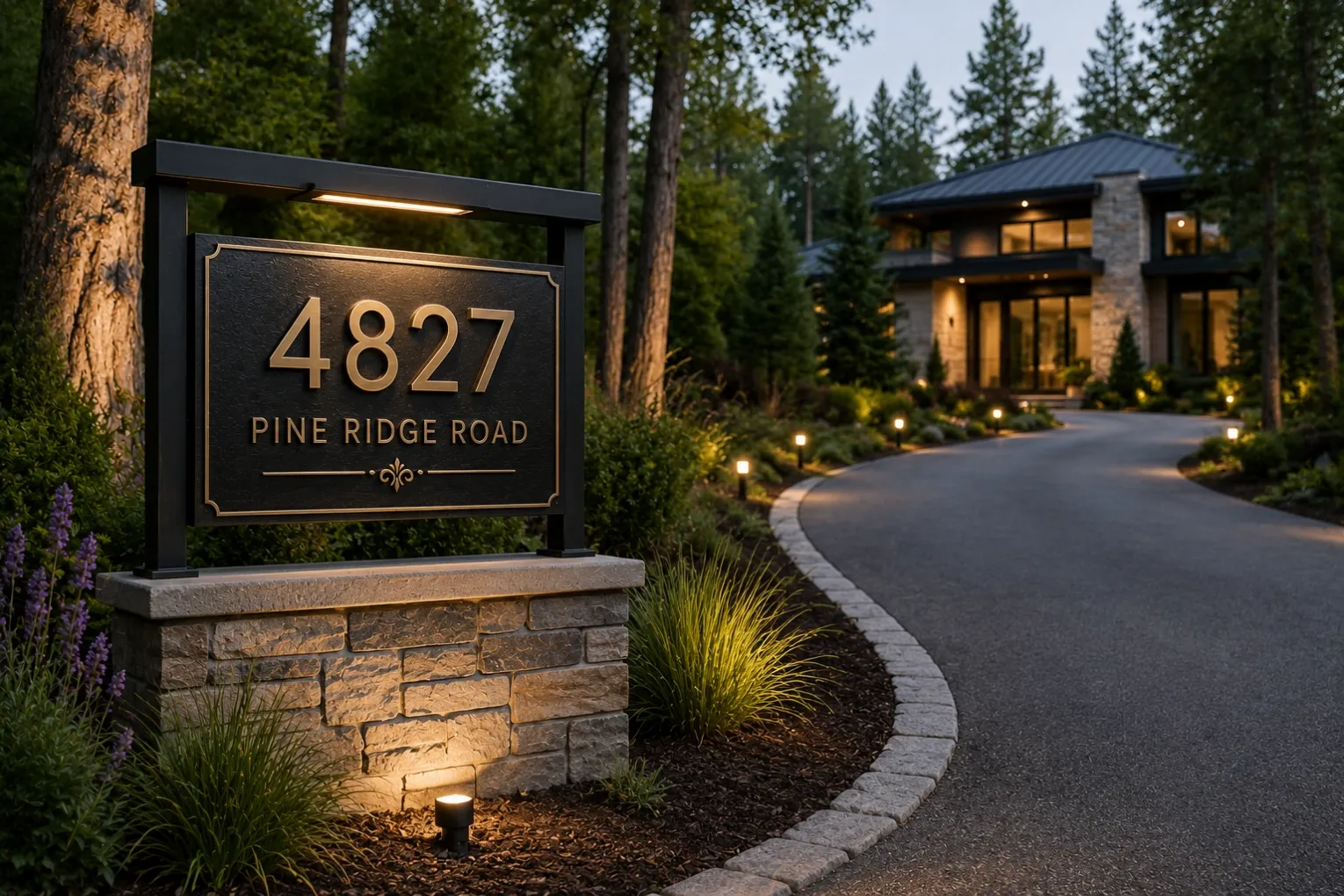
Near the driveway entrance when the house is far from the road
The right choice depends on the distance between the home and street, landscaping, exterior materials, lighting and architectural design.
1. Front Door House Numbers: A Classic Choice
For many properties, placing front door house numbers beside or above the entrance is the simplest solution.
This works especially well when the front entrance is clearly visible from the road.
A modern entrance might use individual metal house address numerals, while a traditional property may look better with a complete house number sign mounted beside the door.
Beside the Door or Above the Door?
Both can work.
Installing numbers beside the door usually creates a cleaner visual line and makes the address easy for guests to identify when approaching the entrance.
Numbers above the door can be useful when there is limited wall space on either side.
However, avoid positioning the numbers behind plants, porch columns, seasonal decorations or a storm door that could make them difficult to see.
2. Display House Numbers on the Exterior Wall
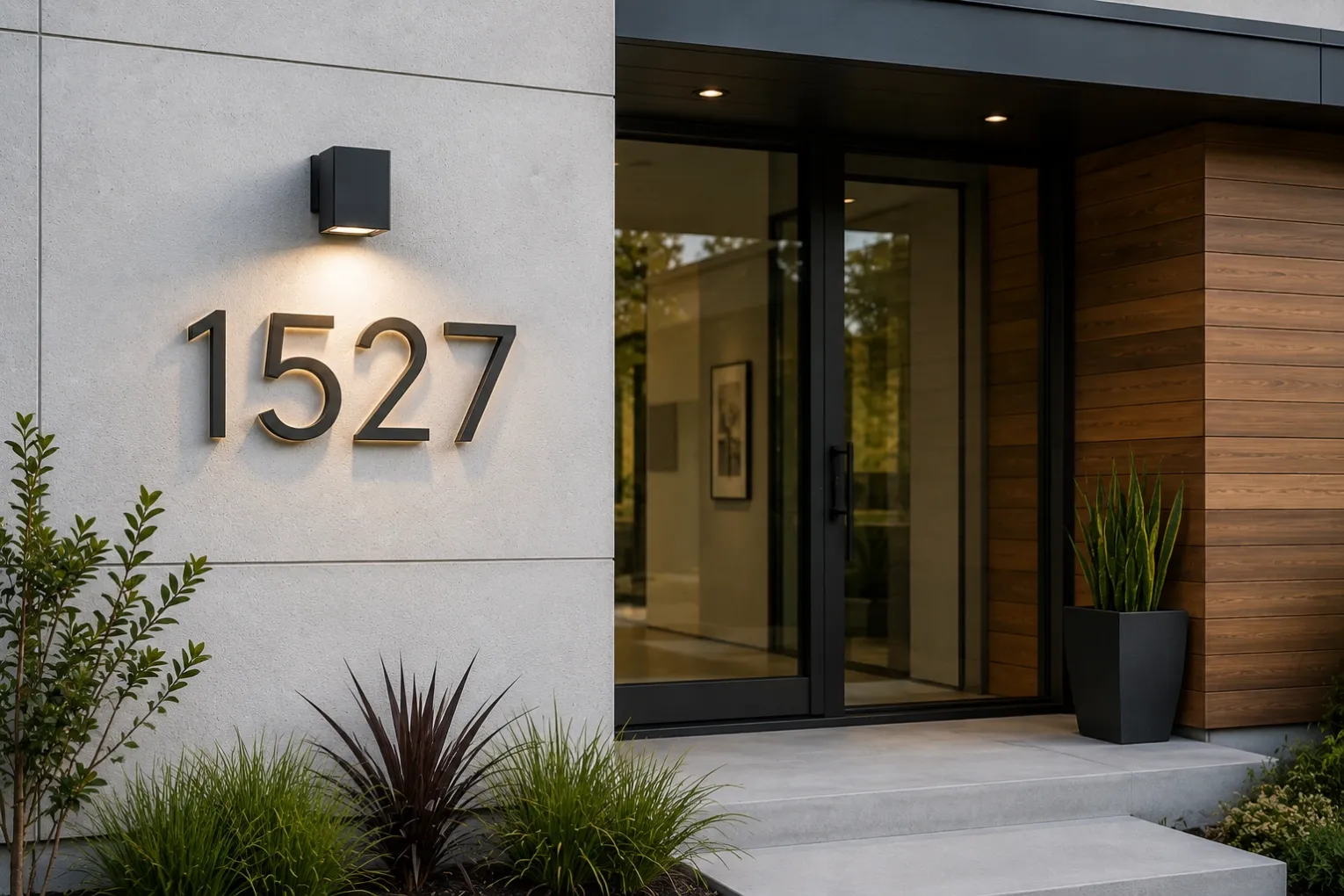
An exterior wall is one of the best places for numbers for house signs, especially when there is a large blank surface near the entrance.
Metal numerals can create a clean architectural feature without making the façade look crowded.
For contemporary homes, consider:
- modern address numbers
- floating metal numerals
- minimalist address lettering
- vertical number arrangements
- brushed metal finishes
- black or dark metal numbers on light walls
- light metallic finishes on dark walls
The contrast between the number and wall is more important than choosing a fashionable color alone.
A beautiful set of address numbers modern in appearance will have little practical value if the numbers disappear into the background.
3. Garage Walls Can Improve Street Visibility
Sometimes the front door is recessed or positioned at an angle that cannot easily be seen from the road.
In this situation, the garage façade may be a better location for house numbers for outside.
The larger wall surface also gives homeowners more freedom to use large house number signs, individual numerals or a horizontal modern address sign.
Before installation, stand across the street and look toward the property.
Ask one simple question:
Could someone unfamiliar with this house identify the number in a few seconds?
If not, consider increasing the number size, improving contrast or changing the installation position.
4. Where Should House Numbers Go When the House Is Far From the Road?
Not every building can be identified easily from the street.
Homes with long driveways, large front gardens, walls or private entrances may need an additional address sign for house identification near the road.
A freestanding house number post, entrance monument, mailbox sign or gate-mounted plate can solve this problem.
The International Fire Code specifically addresses situations where a building cannot be viewed from the public way, noting that a monument, pole or other identification method may be required.
For these properties, a good strategy is to use two address markers:
Roadside identification → House identification
For example:
Driveway House Number Post → Front Door House Number Plate
This provides clear navigation without forcing the main building numbers to become excessively large.
5. House Numbers and Mailboxes
House numbers and mailboxes can work particularly well together for properties where the mailbox is close to the road.
USPS guidance states that curbside mailboxes should carry appropriate address identification. When house numbers and street names have been assigned and authorized for postal use, the house number can form part of that identification.
If the mailbox is positioned far from the actual house, displaying the number there can help visitors locate the driveway before they reach the building.
However, a mailbox number does not necessarily mean you should remove the address from the house itself.
Using both can improve identification.
6. How Large Should House Numbers Be?
There is no universal decorative size that works for every property.
Viewing distance matters.
As a useful reference point, the 2024 International Fire Code specifies address characters of at least 4 inches (102 mm) high, with a minimum stroke width of 1/2 inch (12.7 mm) under its address-identification provision.
Local requirements can differ, so homeowners and project managers should always check applicable municipal or fire-code requirements before installation.
For design purposes, consider:
Viewing Situation | Suggested Design Approach |
|---|---|
Entrance close to sidewalk | Compact, highly legible numerals |
Typical suburban setback | Medium or large numbers |
House far from road | Larger numbers plus roadside sign |
Gated property | Gate or entrance address sign |
Dark exterior wall | Light, contrasting numbers |
Light exterior wall | Dark or strongly contrasting numbers |
The goal is not simply to make numbers on a house large. They need to remain recognizable at the expected viewing distance.
7. Contrast Matters More Than Decoration
Many homeowners search for pretty house numbers, unique house numbers or decorative house numbers.
Appearance matters—but readability should come first.
For example, polished stainless steel numbers may look attractive on a dark stone wall because the materials create visual separation. The same numbers mounted against a similarly reflective silver background may become difficult to read.
Good house number signage should balance:
Visibility + Contrast + Scale + Material + Architecture
This principle works for both traditional house numbers and contemporary designs.
8. Modern House Number Ideas for Contemporary Homes
For minimalist architecture, modern house number signs should feel integrated with the building rather than attached as an afterthought.
Popular house number ideas include individual floating numerals, laser-cut metal plates, vertically arranged numbers, engraved address panels and combinations of house numbers and letters.
Floating Modern Address Numbers
Individual contemporary address numbers can be installed slightly away from the wall to create subtle depth and shadow.
This style works particularly well with concrete, stone, brick and smooth rendered walls.
Metal House Number Plaque
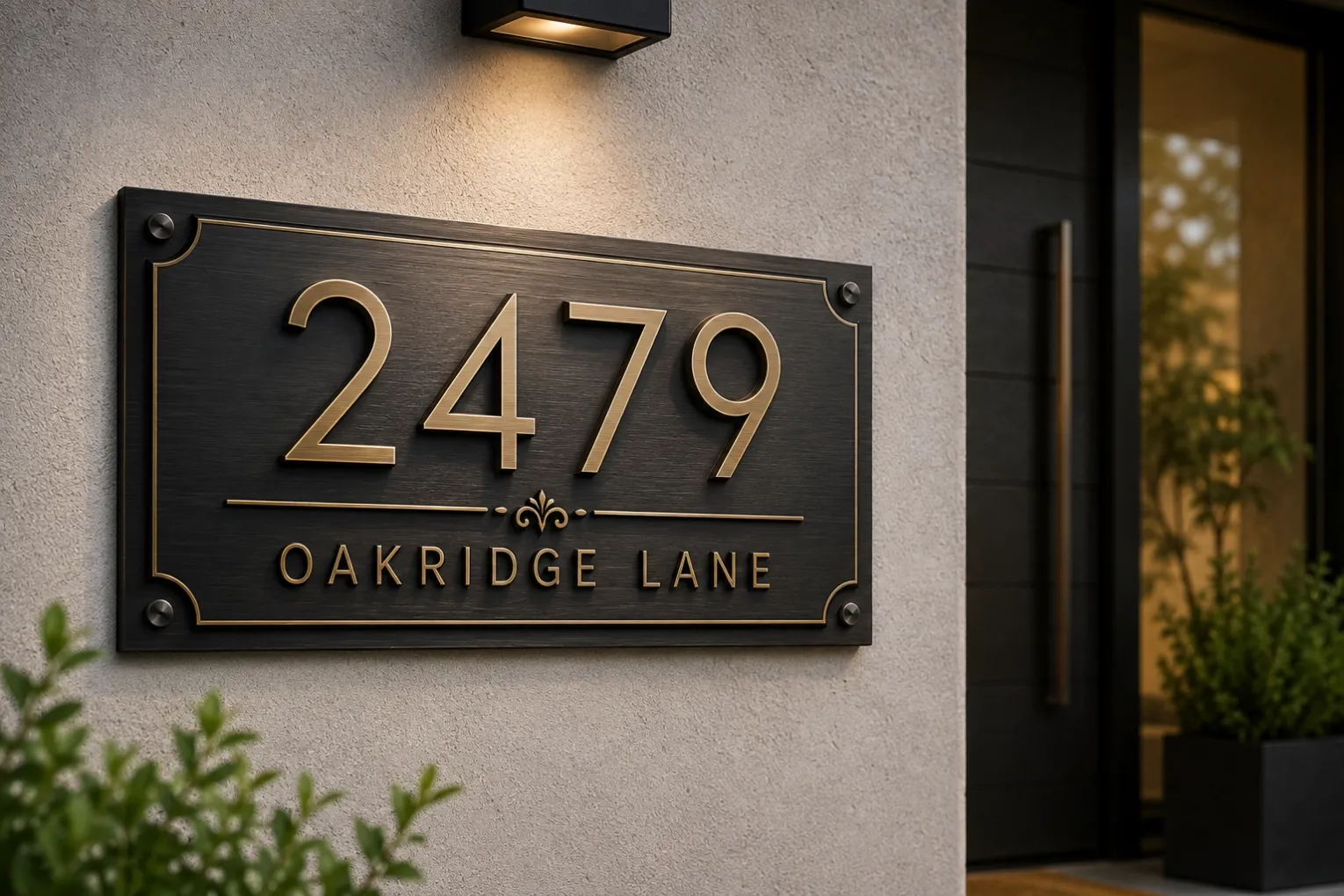
A modern house numbers plaque combines several digits into one unified piece.
It can also incorporate:
- Street names
- Family names
- House names
- Decorative borders
- Logos or symbols
- Custom lettering
This makes it particularly suitable for villas, residences, hotels and architectural projects.
Vertical Address Numbers
Vertical modern house address numbers are useful for narrow walls or columns.
They can create a strong architectural feature while using relatively little horizontal space.
9. Traditional House Number Ideas
Not every property needs a minimalist design.
Classic homes may benefit from traditional house numbers using brass, bronze-inspired finishes, engraved metal plates or decorative lettering.
A traditional house address sign can include both numbers and text.
For example:
28
ROSEWOOD HOUSE
Or:
28 ROSEWOOD LANE
Combining house letters and numbers can make an entrance more distinctive while maintaining clear address identification.
10. Custom House Numbers for a More Personal Entrance
Standard numbers work for many homes, but custom house numbers provide more control over size, material, finish and layout.
A personalized house number sign can be designed around the architecture rather than forcing the building to accommodate an off-the-shelf product.
Customization may include:
- Numeral size
- Font style
- Metal thickness
- Surface finish
- Background plate
- Mounting holes
- Floating installation
- Street name
- Family name
- Custom logo
- Decorative patterns
For architectural projects, personalized house number signs can also be coordinated with gates, railings, mailboxes and other exterior metal elements.
11. Choosing Materials for Outdoor House Numbers
Because address numbers for homes are exposed to weather, material selection matters.
Stainless Steel
Stainless steel is well suited to contemporary exterior designs. It can be brushed, polished or finished in different surface treatments.
Aluminum
Aluminum is lightweight and versatile, making it suitable for many home number signs and decorative plaques.
Brass and Copper
Warm-toned metals work especially well with traditional, vintage or luxury architectural styles.
Coated Metal
Properly finished coated metal provides broad possibilities for color and design, particularly for custom house number projects.
Material selection should consider climate, exposure, installation surface and desired appearance rather than appearance alone.
12. House Numbers for Vinyl Siding
Installing house numbers for vinyl siding requires additional consideration because homeowners may want to avoid damaging or deforming the siding.
The mounting method should suit both the number and the siding system.
Depending on the product and wall construction, installation may involve suitable siding hooks, mounting blocks or carefully planned fasteners.
Heavy metal signs should be securely supported by an appropriate underlying structure rather than relying solely on thin siding panels.
13. Should House Numbers Be Illuminated?
If the property regularly receives visitors after dark, lighting deserves attention.
Even highly visible address numbers for a house during daylight can disappear at night.
Possible solutions include:
- Exterior wall lighting
- Backlit house numbers
- Directional landscape lighting
- Illuminated address plaques
- Reflective or high-contrast surfaces
Lighting should illuminate the numbers without producing excessive glare.
14. Common House Number Placement Mistakes
A stylish home number sign can still perform poorly when installed in the wrong position.
Avoid these common mistakes:
Numbers hidden by landscaping
Trees and shrubs grow. Check whether plants may eventually block the address.
Low contrast
Avoid choosing a finish too similar to the wall.
Numbers that are too small
Consider how far the viewer will be from the property.
Overly decorative fonts
Complex typography may reduce readability.
Placing numbers only on the door
If the entrance cannot be seen from the street, another location may be necessary.
Ignoring nighttime visibility
Check the address after sunset before deciding the installation is complete.
15. How to Choose the Best House Number Location
Before drilling holes or ordering a custom sign, test the proposed location.
Stand at several positions:
- Across the street
- At the driveway entrance
- From the normal direction of vehicle approach
- At the pedestrian entrance
- At the front gate
- Near the front door
Check the location in both daylight and darkness.
If the street address numbers remain easy to recognize from the important approach points, the placement is probably suitable.
For large properties, using more than one address number sign may provide better identification.
House Number Placement Checklist
Before installing your new address sign, ask:
- Can the numbers be seen from the street?
- Is there strong contrast with the background?
- Are the numbers large enough for the viewing distance?
- Can plants or decorations block them?
- Are they visible at night?
- Is the mounting surface suitable?
- Does the design match the architecture?
- Are local address-identification requirements satisfied?
- Would a second sign near the driveway improve visibility?
The best house signs for address identification combine practical visibility with thoughtful exterior design.
Final Thoughts: Where Should House Numbers Be Displayed?
The best place to display house numbers is wherever they can be identified quickly and clearly from the street or normal approach to the property.
For many homes, that means beside the front door, above the entrance or on a highly visible exterior wall. For homes set farther back, a house number post, gate sign, mailbox marker or roadside house address number sign may be a better solution.
Design comes next.
Whether you prefer modernist house numbers, traditional metal numerals, contemporary house address numbers, or a fully personalized house number sign, the strongest result combines visibility, contrast, durability and architectural style.
At Kaiyubang, custom metal address plaques and house number solutions can be developed around different sizes, finishes, lettering styles and architectural requirements—turning practical address numbers into a distinctive part of the entrance design.